Sichuan-style bonsai is grand and steady, with elegance contained within its refined beauty.
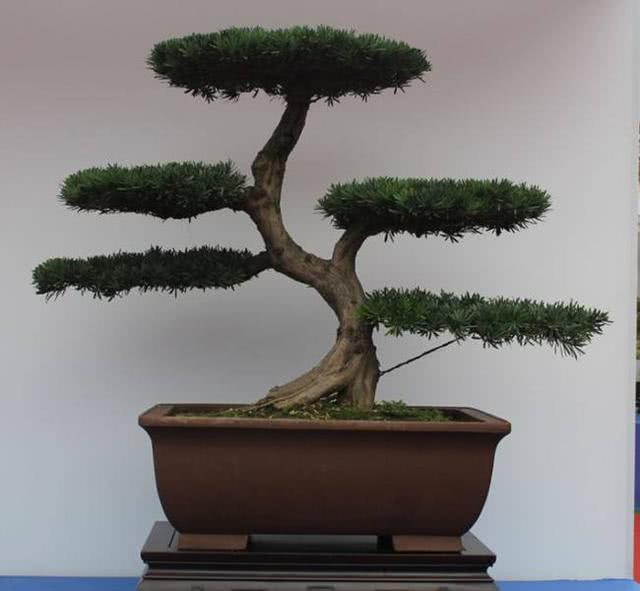
When it comes to bonsai, what is the first thing that comes to mind? Many friends love potted plants, and the editor loves potted plants too. There are many types of potted plants, including the Lingnan school, the Su school, the Yang school, and the Hui school, and each has its own characteristics, but what the editor loves most is the Sichuan school with its twisting, graceful forms. Partly because the editor is from Sichuan, and partly because the Sichuan school really suits the editor's taste. Follow the editor and take a look at what characteristics our Sichuan-style bonsai has.
1. Both grand and steady, with elegance contained within its refined beauty
The development of Sichuan-style bonsai art from ancient times to the present has also been a process from simple to complex and from complex to simple. This process not only gave Sichuan-style bonsai its inclusive character, but also gradually formed its own characteristics. The flat top and the stable bends all reflect the characteristics of Sichuan-style bonsai, exactly as Mr. Zhang Zhongmin once said.
2. Strong regional characteristics and styling features
Sichuan culture differs from Central Plains culture and has strong regional characteristics. These characteristics are all expressed in the bonsai: the seclusion of Qingcheng, the beauty of Emei, the peril of the Three Gorges, the majesty of Jianmen Pass, and the solidity of Diaoyutai. These are used to display the magnificent Bashu characteristics, and also embody the spiritual connotation of the vigorous vitality of large trees. The small objects dotted among them also play the role of adding the finishing touch. If you savor it carefully, the artistic conception of a splashed-ink landscape painting is right there within it, full of beauty.
3. In styling and production, it emphasizes the beauty of metrical form
When speaking of the characteristics of Sichuan-style bonsai, one must mention the beauty of metrical form. Among Tang poems, regulated verse is the most catchy and widely circulated form of metrical beauty. This characteristic in bonsai also makes it more able to be passed down. It is precisely because Sichuan-style bonsai has the beauty of metrical form that it can endure in culture for so long, and in this process it established its own principles and norms and also formed its own most unique style.
Mr. Zhang Zhongmin is a famous landscape technician in our country, and even more so a very well-known figure in today's Sichuan-style bonsai world. Even though he has reached the age of enjoying his later years in comfort, he is still striving on the front lines of the bonsai cause. Isn't such a spirit admirable? Everyone can learn from him.
Mr. Chen Sifu, although he has already passed away, left us immortal wealth. His position in the bonsai world is unshakable. His representative works, the two potted plants "Standing Gracefully" and "Dreaming Thoughts," still express the gentleman's aesthetic ideas.
Landscape bonsai now faces a very awkward situation, and that is that no one is engaged in the cause of landscape bonsai anymore. The bonsai master Hu Shixun has a whole body of bonsai skills that no one comes to learn, as if it were wasted. The editor wrote this article hoping to stir everyone's interest in learning bonsai, and thereby go and learn this art.