Succulent leaves grow thick and fast, and it depends on this care method
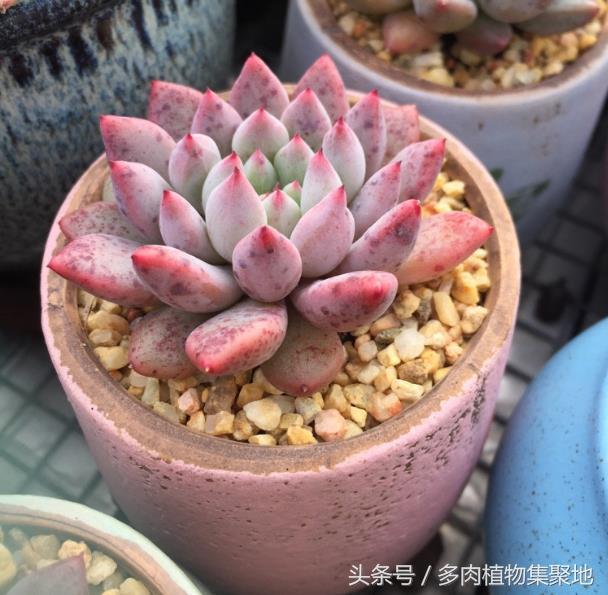
Many people believe that plenty of water can promote rapid growth in succulents, but that is not the case. Overwatering will only make succulents grow taller, not plumper. Only when you control watering and let the succulent feel a sense of water shortage will it, over time, use its own stored water to grow, and the leaves will naturally become thick and plump. However, this reduced watering must also be moderate; it cannot be too dry, otherwise the leaves will become shriveled. Generally, for succulents whose root systems have already developed well, watering 1-2 times a month during the growing season is enough. Water thoroughly each time, and water in the morning or evening.
If a succulent lacks water, its leaves will become thin. But that does not mean more water will make it plump; too much water will only make the succulent stretch its stem and grow taller, causing leggy growth. So we need to control watering appropriately for succulents, giving them a sense of crisis about water shortage. Over time, they will learn to store water in their own leaves, and only then will the leaves become round and plump. In autumn, watering thoroughly once every 2 weeks is generally enough. If you control water for too long, the succulent will consume its own water, which will also cause the leaves to shrivel, so friends must grasp this balance well.
If you want succulents to grow sturdier, during their growing season, that is, spring and autumn, you need to apply more potassium fertilizer. On one hand, it can promote the growth of roots and stems; on the other hand, it can make the leaves plump, tender and glossy. A large temperature difference is very beneficial for the accumulation of nutrients in succulents. With a large day-night temperature difference, succulents can fully absorb nutrients from the soil during the day. At night, when the temperature is low, the internal material activity in the succulent weakens, and nutrient loss decreases accordingly, so it can fully store nutrients and naturally become plump. Therefore, at night you can leave the succulents outdoors, where the temperature difference is relatively large. In autumn, just let them stay on the balcony. But if the winter temperature is too low, you must move them indoors, otherwise they will freeze.
In summer, be careful of high temperatures and long periods of exposure. Succulent plant tissue cells are thick and release heat slowly, making leaves very prone to sunburn. In other seasons, full sunlight helps the plant grow. Many plants that need shade, such as soft-leaved varieties in the genus Haworthia, the genus Rabdosia in the Lamiaceae family, and certain varieties in the genus Senecio in the Asteraceae family, need to be protected from sunburn. What should you do when succulents only grow taller and not plump? If they are too tall, you can behead them, let them dry for a few days and then plant them again. The leaves on the original stem can be leaf-propagated, or you can keep growing it, and many small heads, which can also be called side shoots, will grow from the stem.
Temperatures of 15-28°C are most suitable, and temperatures of 5-35°C are the plant's tolerance limit (beyond the tolerance limit, it will enter a dormant state). But many succulents have lower temperature requirements. A relatively large day-night temperature difference is beneficial for the growth of succulents. When caring for succulents, a ventilated environment is very important. On hot summer nights, strengthen ventilation.
This is a gathering place for succulent lovers, sharing succulent care tips. Welcome to follow and exchange ideas.