After Start of Summer, grow these potted plants to repel mosquitoes and insects and absorb formaldehyde, rivaling an air purifier
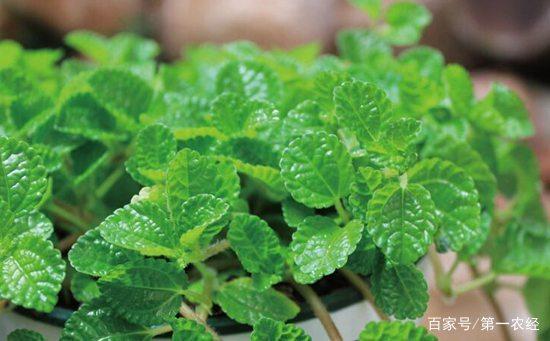
In the blink of an eye, it is already Start of Summer, and as temperatures rise, the number of mosquitoes and insects at home will keep increasing. Many friends are busy buying mosquito repellent, but actually growing some insect-repelling potted plants at home is also a good choice, especially potted plants such as lemon balm (Melissa officinalis) and chrysanthemums, which not only have high ornamental value but can also purify harmful substances in the air. Most importantly, they can repel insects. One pot is worth two air purifiers, simply achieving multiple benefits at once. So, what insect-repelling potted plants are there? Below we introduce some potted plants suitable for placing at home, repelling mosquitoes and insects and purifying the air, accomplishing both at once. Let's take a look together!
1. Lemon balm (Melissa officinalis)
Insect-repelling effect: ★★★★
Care method: Lemon balm can absorb formaldehyde, sulfur dioxide and benzene. Besides these, the lemon fragrance it gives off can also serve as an air freshener. In addition, lemon balm likes bright light. If the room has good lighting, you can place lemon balm in a spot with sunlight, and normal indoor ventilation is enough. If the room lighting is not very good, such as in a bathroom or kitchen, then after placing lemon balm in the room for 72 hours, move it to a place with sufficient sunlight, and after 72 hours or more put it back. When the weather is not cold, it can also be placed outdoors to absorb light and get fresh air; lemon balm can simply be watered with clean water or rice-washing water every 3-5 days. If the branches and leaves wilt due to lack of water, replenish water immediately and it will soon recover. For supplemental nutrients, a commonly used general plant nutrient solution can be used.
2. Chrysanthemum
Insect-repelling effect: ★★★★
Care method: The floral fragrance of chrysanthemums carries a slight bitterness, and their advantages are similar to those of mugwort. They are also good at repelling mosquitoes and insects, and at the same time can purify the air, absorbing harmful gases in the air such as sulfur dioxide, hydrogen fluoride, hydrogen chloride and benzene, achieving two benefits at once! Chrysanthemums have wide adaptability to soil acidity and alkalinity, and can grow in soil from slightly acidic to slightly alkaline, requiring a pH value between 5.5-7.0. It is advisable to choose fertile sandy soil, starting with a small pot and then a larger pot, repotting 2-3 times, and in July the pot can be finalized. For the final pot, a mixed soil made of 6 parts leaf mold, 3 parts sandy soil and 1 part cake fertilizer residue can be used. After watering thoroughly, place it in a cool place, and after the plant grows normally, move it to a sunny place. Water management during the chrysanthemum growing period must follow the principle of "water promptly when dry, drain promptly when waterlogged." And around the bud stage, sufficient water must be ensured.
3. Spider plant (Chlorophytum comosum)
Insect-repelling effect: ★★★
Care method: Even in a room with diffused light or dim light, it can still "purify" the air. The spider plant has always ranked high. As temperatures rise in spring and summer, the odors of furniture are released, so hurry up and grow some! In the care process of spider plants, spider plants like water. Because their fleshy roots have well-developed water-storing tissue, they have strong drought resistance, but from March to September during the peak growth period they need a larger amount of water, and should be watered and misted frequently to increase humidity and keep the potting soil completely moist. During the winter dormant period, water can be given after the surface of the potting soil is dry to about one cm deep. It should be noted that if the soil is too dry, the leaf cluster may temporarily fade in color. Although it will recover its original color after watering again, the leaf tips may permanently turn brown.
4. Snake plant (Sansevieria trifasciata)
Insect-repelling effect: ★★★
Care method: As we know, a medium-sized snake plant can absorb most of the harmful substances in a 10 sq m room every day, making it a very good indoor potted plant. In the care process of snake plants, snake plants are not very strict about soil, but it is still best to choose soil with good drainage; a mixture of leaf mold and some sand can be used. Adjust the amount of watering according to temperature and seasonal changes. In spring and summer, the potting soil should be kept moist, but waterlogging must be avoided. In autumn and winter, water only after the potting soil is completely dry. In daily care, the leaf surfaces can be washed with water to keep the plant looking attractive and to help it grow better. When the winter temperature is below 10 degrees, do not water, to avoid cold damage. Watering should be done in the morning or evening.
5. Aloe (Aloe vera)
Insect-repelling effect: ★★
Care method: The potting soil for aloe should be kept moist. Too much water is bad for the aloe's root system, because aloe is drought-tolerant and afraid of waterlogging. When watering is needed, water gently along the edge of the pot, but do not pour forcefully, so that the potting soil does not easily become compacted and affect the soil's air permeability. When the potting soil becomes compacted, loosen the soil in good time, to a depth of about 1.5 cm; aloe needs sufficient sunlight to grow. Except that newly planted aloe (grown for about half a month) is not suitable for sun exposure and can only get some morning sun, at other times it can be exposed to more sun; the more sun it gets, the better it grows. Potted aloe generally needs to be repotted once every 1-2 years, preferably in spring from April to May and in autumn from September to October each year. When repotting, keep the soil ball intact and try not to damage the root system. After repotting, it still needs to be kept in a semi-shaded place for a period of care, and only after it has fully recovered should it be moved to a sunny place for care.