A Detailed Guide to Practical Techniques for Bonsai Care and Management
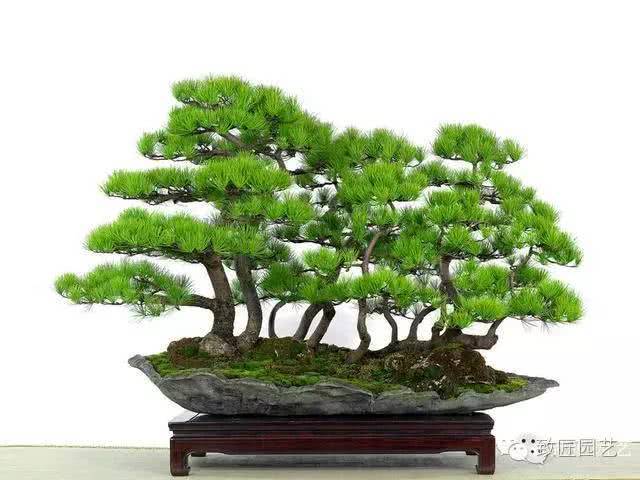
Bonsaiis a living art. It changes through the four seasons, changes as it grows from youth to old age, and can even change within a single day, from morning to noon to evening. To preserve the lasting artistry of a bonsai, meticulous care and management are indispensable. As the saying goes: "three parts planting, seven parts caring", which expresses the importance of care and management.
Bonsai care and management is divided intoroutine care and management and plant protection management.
Routine care and management refers to techniques such aswatering, fertilizing, and pruningto promote healthy growth of the trees in the bonsai and achieve the goal of maintaining the landscape. Plant protection management refers to the use of pest and disease control measures to ensure the healthy growth of bonsai trees.
Plant protection management is divided intothree aspects: repotting, pest and disease control, and the three protections.
I. Watering
Water is the first essential element for plant growth; without water, plants will die. Too much or too little water will both affect the growth and development of bonsai trees, and in severe cases will lead to death. Watering may seem simple, but mastering it properly is no easy task. It requires exploration, finding patterns, and learning scientific management. Watering is usually the most basic task in bonsai tree care and management, and it must be mastered. The general principle of watering is: "Do not water if not dry; when dry, water thoroughly." In practice, the amount of water needed should be determined according to the characteristics of the bonsai tree itself and environmental factors.
The following introduces watering in detail from six aspects: water requirement, wetness and dryness of the potting soil, watering time, watering methods, types of water, and drainage.
1. Water requirement
(1)Different tree species have different water requirements
Generally, those with large, softer leaves evaporate water quickly and need more watering; those with small, harder leaves lose water slowly and need less watering. Drought-tolerant species should be watered less, while moisture-tolerant species should be watered more.
(2)Different growth stages have different water requirements
During the flower bud differentiation stage, the amount of watering should be reduced, which helps increase flower buds. During the flowering and fruiting stages, the amount of watering should be increased.
For pines, when new buds are unfolding leaves, the amount of watering should be reduced, while cypresses are the opposite. Trees need more water in the early growth stage than in the late growth stage. Newly potted tree stumps should not be watered too much because of the wounds.
(3)Different weather and seasonsmean different amounts of watering. In spring and autumn, generally water once a day or every other day; in summer, water once or twice a day; in winter, do not water much, and water once every several days. In the plum rain season in the south, watering should be stopped.
(4)Different soil textures in the potmean different amounts of watering. Water less for clay soil, and water more for sandy soil and peat soil.
(5) Different textures, sizes, and depths of potsmean different amounts of watering. Clay pots dry easily, purple clay pots are next, and glazed pots and stone pots do not dry easily. Large pots and deep pots need more water each time but fewer times, while small pots and shallow pots need less water each time but more times. Miniature bonsai can be placed on a sand bed to maintain humidity; in addition to normal watering, the leaves should also be sprayed frequently.
2. Methods for judging whether the potting soil is dry or wet
(1) Observe the tree stump. If the stump is too dry and loses water, the leaves will droop, turn yellow, fall off, or even die. If the stump is too wet, it will lack oxygen, causing root rot or even death.
(2) Look at the potting soil. It can be judged by the depth of the soil color. If the color is dark, the soil is wet; otherwise, the soil is dry.
(3) Tap the edge of the pot. A dull sound indicates that the potting soil is wet, while a crisp sound indicates that the potting soil is dry.
(4) Instruments. There is now a soil moisture meter on the market; insert it into the potting soil and you will know the soil's water content.
3. Watering time
In spring and autumn, watering is suitable in the morning or afternoon. In summer, water generally in the early morning or evening, and never water at the hot midday, but in winter it is suitable to water at noon.
4. Watering methods
(1) Pouring. The most basic watering method is to pour water onto the potting soil. Strictly speaking, a lead watering can should be used. The watering can should not be held too high, and try not to use a hose for watering, so as not to wash away the potting soil.
(2) Spraying. That is, spraying the leaf surface, which is beneficial for replenishing water to the tree and removing dust from the leaves, but it should not be done frequently, otherwise it easily causes leggy branch growth.
(3) Soaking. For small and miniature bonsai, it is not suitable to water thoroughly, so the soaking method can be used, as shown in the figure below.
Soaking method
5. Types of water
Rainwater, river water, well water, pond water, and tap water can all be used, but two points should be noted: first, water containing salt or alkali cannot be used; second, the temperature difference between the water and the soil should not be too large. The water can first be stored in a water vat or reservoir to adjust the water temperature.
6. Pay attention to drainage
Water should not accumulate in the pot for long periods, and drainage should be provided.
II. Fertilizing
Because tree (stump) bonsai grows in limited soil, the nutrients it stores are limited and need to be supplemented. Lack of fertilizer will cause weak branches and yellow leaves, sparse flowers and fruits, and make the plant susceptible to disease, affecting the ornamental effect. However, to maintain the unique effect of a stump landscape, fertilizer should also be applied appropriately. Therefore, scientific fertilization should be advocated.
Fertilizing is explained in three parts: judging the appearance of fertilizer deficiency, rational fertilization, and points to note.
1. Judging the appearance of fertilizer deficiency in stump landscapes
In fertilizer-deficient plants, the leaf shape is smaller than normal, the leaf color tends toward yellow or pale green, the leaves are sparse and thin in texture; the buds are small, and the tips of the newly grown young leaves appear withered; the side branches are short and underdeveloped.
(1) Nitrogen deficiency: the leaves turn yellow, and the entire tree stump loses its green color.
(2) Phosphorus deficiency: old leaves appear dark green and then turn bronze.
(3) Potassium deficiency: the edges of old leaves first turn brown, and necrotic spots appear from the leaf tip upward; the stems are soft and prone to lodging.
(4) Iron deficiency: the veins of new leaves remain green, while the leaf tissue turns yellow-green to yellow. In severe cases, this condition also spreads downward to the older leaves.
(5) Magnesium deficiency: the areas between the veins of old leaves lose green color.
2. Rational fertilization
(1) The relationship between fertilizing and climate. The most closely related factors are rainfall and temperature. When the temperature is low and rainfall is scarce, fertilizer decomposes slowly, so thoroughly decomposed fertilizer should be applied; when the temperature is high and rainfall is abundant, fertilization should be done in several applications. In addition, in different seasons, the ability of trees to absorb nutrients also differs, so the requirements for fertilization also differ by season. Generally, in early spring during the budding stage, a light thin fertilizer should be applied; in summer, it is suitable to apply lightly; in late autumn and winter, to help new branches lignify and avoid cold damage during overwintering, fertilization should be stopped.
(2) The relationship between fertilizing and the nature of the potting soil. To better exert the effect of fertilizer, pay attention when fertilizing to:
Increase the humus content in the potting soil.
Analyze the various nutrients in the potting soil, and supplement whatever is lacking.
Fertilize according to the acidity and alkalinity of the potting soil; for alkaline soil, physiological fertilizer should be used.
Pay attention to the soil texture. For clay soil, apply shallowly to accelerate decomposition; for sandy soil, apply in multiple applications.
(3) The relationship between fertilizing and tree stumps. Different bonsai trees, because of different varieties and different ornamental parts, also differ in their fertilizer requirements and nutrient needs. Generally speaking, species grown for trunk and branch-leaf display should be given more nitrogen fertilizer several times a year, but the amount should not be too much; flowering and fruiting types should be given more phosphorus fertilizer, with an appropriate amount of potassium fertilizer, several times a year, at low concentration; pines and cypresses mainly use nitrogen fertilizer, but it should be applied sparingly to keep needles short and leaves small. Some tree stumps need dwarfing, so fertilizer should be controlled in the early stage. In addition, different growth stages require different nutrients: during the growth stage, more nitrogen fertilizer should be applied, and during the flowering and fruiting stage, more phosphorus and potassium fertilizer should be applied.
3. Points to note when fertilizing
(1) Organic fertilizer must be fully decomposed before use, otherwise it will cause fertilizer damage.
(2) Keep the fertilizer clean, otherwise it is prone to pests and diseases.
(3) Apply thin fertilizer frequently.
(4) Except in special cases, foliar fertilization may be used; generally, fertilizer should not be poured on the leaves.
(5) Newly potted plants should not be fertilized.
(6) Water the next day after fertilizing.
(7) It is suitable to fertilize in the evening or on cloudy days.
III. Pruning
After a bonsai tree has taken shape, it still continues to grow. To prevent it from losing its original form, it needs frequent pruning during care and management: long branches should be shortened, dense branches should be thinned, and the posture should be made more perfect.
Routine maintenance pruning includes the following measures:
1. Bud removal. Some trees, during the growth period, often sprout adventitious buds at the roots and on the branches and trunk, especially species with strong sprouting ability, such as elm, Sageretia thea, pomegranate, and Serissa japonica. If these are not removed, they not only affect appearance but also consume a large amount of nutrients. Therefore, timely bud removal is very important.
2. Pinching. During the vigorous growth period of trees, many shoots often grow. For these young tender shoots, the tips can be removed by hand or with scissors to keep the crown in a certain form, promote the development of axillary buds, and make the branches and leaves denser. For example, pinching off the tender shoots of Sabina chinensis and Sabina chinensis in May to June can make the crown more rounded. For pine bonsai, removing the strong terminal buds can make the newly grown needles relatively shorter.
3. Leaf removal. For foliage-display bonsai trees, leaf removal can achieve the best ornamental effect. For example, if maple leaves are removed in summer, they will be even more brilliantly red by late autumn; if the old leaves of elm are removed 2 to 3 times a year, the new leaves grown after each sprouting are often verdant enough to drip.
Leaf removal can also turn tree stumps that leaf out once a year into ones that leaf out 2 to 3 times a year. The time for leaf removal should be during the vigorous growth period of the stump, and fertilizer should be applied immediately after leaf removal.
4. Branch pruning. During the growth process, bonsai trees will produce many branches. To maintain a beautiful form, they should be pruned frequently.
Points to note when pruning branches include: pines and cypresses have weak sprouting ability and should be pruned less; flowering and fruiting types should be pruned according to their habits; forest-style bonsai should pay attention to overall beauty; in the plum rain season, trees grow branches vigorously and should be pruned frequently; thick branches should be pruned during the dormant period; pay attention to the direction of bud pruning, generally retaining more outer buds.
IV. Repotting
Bonsai treesThe pot or soil will, after a certain period of time, hinder the normal growth of the trees in it, and at that time repotting and soil replacement should be carried out. For repotting, the original pot or a pot one size larger may be used, and this should be decided according to the tree species and tree size. When repotting, take the tree with soil out of the pot, remove 13 to 12 parts of the old soil around the root ball (for pines and cypresses, remove 15 to 13 parts of the old soil), and at the same time combine this with pruning to remove some old roots and rotten roots; the cut surfaces need to be smooth. Then place the prepared growing soil into the pot and replant the tree. After filling with soil, there should be a distance of 2 to 3 cm between the surface soil and the pot rim as a "water opening" to facilitate watering.
The time for repotting is generally suitable in the period after autumn or in early spring. For deciduous trees, repot once every 1 to 2 years; for pines and cypresses, repot once every 3 to 5 years. Generally, small pots are repotted at an interval of 1 to 2 years, medium pots at an interval of 2 to 3 years, and large pots at an interval of 3 to 5 years.
V. Pest and disease control
The principle of pest and disease control is: "Prevention first, integrated control." To prevent the occurrence of pests and diseases, the fertilizer used must be fully decomposed; the potting soil used must be disinfected and should not be too wet; the site must be clean, with sufficient light and ventilation; pruning must be timely; branches and leaves must be cleaned regularly. Once pests and diseases are discovered, they must be "treated early, treated while small, and treated thoroughly."
VI. The three protections
1. Sun protection. Shading should be provided. For shade-loving species, such as bonsai trees in small pots or shallow pots, a shed should generally be built to provide shade.
2. Wind protection. According to weather forecasts, before strong winds arrive, measures such as securing and moving should be taken in advance to avoid losses.
3. Cold protection. In the cold winter season, to avoid frost damage to bonsai trees, it is best to set up a windbreak on the northwest side of the site. Plastic film, straw bags, and the like can also be used to cover the pot surface for cold protection. In particular, some cold-intolerant tree species should be moved into a greenhouse.
Wonderful content