This plant is so powerful in its effects that neither men nor women should miss out on it
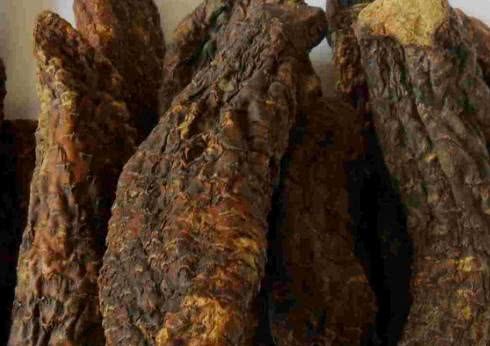
Cistanche is a parasitic plant that parasitizes the roots of the desert tree sacsaoul, drawing nutrients and water from its sacsaoul host. It has long been known as the "desert ginseng" and has extremely high medicinal value; it is a precious traditional Chinese medicinal herb. Historically, Cistanche was presented as a treasure by the states of the Western Regions as tribute to the imperial court, and it is also one of the tonic medicines used most frequently in prescriptions for tonifying the kidney and strengthening yang throughout the ages. It is a tall herb, 40-160 cm high, mostly growing underground. The stem is unbranched or divides into 2-4 branches from the base, up to 5-10 (-15) cm in diameter in the lower part, gradually tapering upward to 2-5 cm in diameter. The leaves are broadly ovate or triangular-ovate, 0.5-1.5 cm long, 1-2 cm wide; those at the lower part of the stem are denser, while those at the upper part are sparser and narrower, lanceolate or narrowly lanceolate, 2-4 cm long, 0.5-1 cm wide, hairless on both surfaces. The inflorescence is spicate, 15-50 cm long, 4-7 cm in diameter; the bracts in the lower half or throughout the inflorescence are relatively long, equal to or slightly longer than the corolla, ovate-lanceolate, lanceolate or linear-lanceolate, together with the bracteoles and corolla lobes sparsely pubescent or nearly hairless on the outside and margins; bracteoles 2, ovate-lanceolate or lanceolate, equal to or slightly longer than the calyx.
The calyx is campanulate, 1-1.5 cm long, with 5 shallow lobes at the apex, the lobes nearly circular, 2.5-4 mm long, 3-5 mm wide. The corolla is tubular-campanulate, 3-4 cm long, with 5 lobes at the apex, the lobes nearly semicircular, 4-6 mm long, 0.6-1 cm wide, the margins often slightly recurved, variable in color, pale yellowish-white or pale purple, often turning brownish after drying. There are 4 stamens; the filaments are inserted 5-6 mm from the base of the tube, 1.5-2.5 cm long, with crinkled long pubescence at the base; the anthers are oblong-ovate, 3.5-4.5 mm long, densely covered with long pubescence, with an abruptly pointed tip at the base. The ovary is elliptical, about 1 cm long, with nectaries at the base; the style is slightly longer than the stamens, hairless, and the stigma is nearly spherical. The capsule is ovoid, 1.5-2.7 cm long, 1.3-1.4 cm in diameter, often with a persistent style at the apex, dehiscing into 2 valves. The seeds are elliptical or nearly ovoid, about 0.6-1 mm long, reticulate on the outside, glossy. The flowering period is May-June, and the fruiting period is June-August. Since the 1980s, a large amount of research has been conducted at home and abroad on the constituents of Cistanche, with Japan starting relatively early; with the rapid development of separation, extraction and detection techniques, many types of substances have been isolated, mainly classified into phenylethanoid glycosides, iridoids, lignans, polysaccharides, more than a dozen amino acids, various alkaloids, etc., and it is rich in trace elements needed by the human body. Among these, total phenylethanoid glycosides are the main active components in Cistanche, with functions such as improving male sexual function, treating uterine cold and infertility in women, antioxidant effects, anti-aging, improving immunity, and enhancing memory.
Since the 1980s, a large amount of research has been conducted at home and abroad on the constituents of Cistanche, with Japan starting relatively early; with the rapid development of separation, extraction and detection techniques, many types of substances have been isolated, mainly classified into phenylethanoid glycosides, iridoids, lignans, polysaccharides, more than a dozen amino acids, various alkaloids, etc., and it is rich in trace elements needed by the human body. Among these, total phenylethanoid glycosides are the main active components in Cistanche, with functions such as improving male sexual function, treating uterine cold and infertility in women, antioxidant effects, anti-aging, improving immunity, and enhancing memory. Cistanche is a precious medicinal herb that can excite the pituitary gland and adrenal cortex or has effects similar to adrenal cortical hormones and regulates the body's immune function; polysaccharides are present at relatively high levels in its extracts, and the immune-enhancing effect of the polysaccharide components may play a major role in the tonic and restorative effects of Cistanche
In the Tang Dynasty, the "Supplement to the Materia Medica" once recorded: "Three qian of Cistanche, decocted three times and processed once, taken warm, and the male organ will never decline in a lifetime." Modern medicine has also confirmed this: Cistanche contains large amounts of amino acids, cystine, vitamins and minerals, rare nutritional and tonic components, and has great tonic effects on male sexual organs such as the kidneys, testes, penis and corpus cavernosum, and can also effectively improve sperm motility and quality. The kidney stores essence, governs the bones and produces marrow, and is the foundation of innate constitution, the driving force and source of physical strength. During prolonged exercise, excessive fatigue causing a drop in blood testosterone is the main factor in the decline of the body's exercise capacity and the prolongation of the recovery process. Cistanche can prevent and treat exercise-induced decreases in blood testosterone, promote the secretion of pituitary gonadal hormones, accelerate fatigue recovery, and improve exercise capacity. It can also reduce blood lactate accumulation after quantitative-load exercise, speed up its clearance, and improve the body's acid tolerance.