What are some potted plants that bloom in all four seasons?
Are there any plants that bloom in all four seasons and do well in pots?
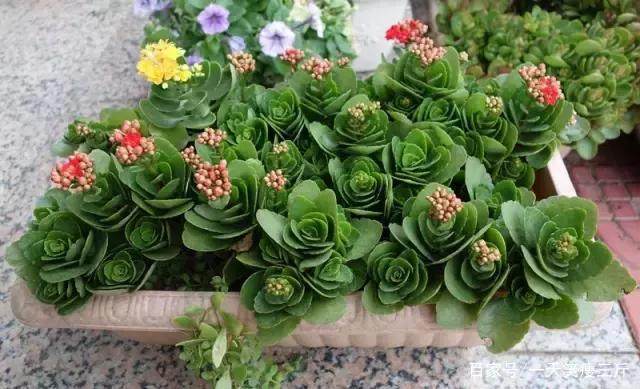
The first one that comes to mind is the kalanchoe (Kalanchoe blossfeldiana). It is precisely because of its long blooming period that it has earned the laudatory name "longevity flower." Grow a large pot of it, and you can basically see flowers all winter long, and it is easy to care for and relatively low-maintenance.
There are thousands upon thousands of kalanchoe varieties, and the flowers of most varieties are extraordinarily brilliant. It likes a warm, slightly dry environment, dislikes cold or damp conditions, and enjoys plenty of indirect light.
2. Christmas cactus
Although the Christmas cactus (Schlumbergera) does not bloom as long as the kalanchoe, it is one of the most popular flowers in winter. The Christmas cactus has cute claw-like segments, and paired with bright flowers of various colors, it is very appealing. Even a small pot of it can keep producing buds.
Its blooming period also changes with temperature and light. It is a short-day plant, so generally giving it 3 to 6 hours of light per day is enough. If it gets more than 8 hours of light, its blooming time will come sooner. If the temperature is higher, the blooming period will also arrive sooner, but the blooming period will also become shorter.
The temperature during the blooming period is best kept between 12 and 20 degrees. Keep the potting soil slightly dry, do not water frequently, give about 3 hours of indirect light each day, and do not move it around casually. The leaf surfaces can get wet, but the flower buds must not get wet.
3. Clivia
The clivia (Clivia miniata) has an elegant plant shape, with neat leaves and orange-yellow flowers that give people a very scholarly feel at a glance. Its ornamental and decorative value is excellent, and its care is simple, so it is deeply loved by flower enthusiasts.
The clivia's blooming period lasts more than a month, blooming in winter and spring. When caring for it indoors in winter, just make sure the temperature is above 10 degrees. Water it appropriately in winter; it is fairly drought-tolerant, so there is no need to worry about lack of water.
Watering heavily during the blooming period can easily cause root rot, and you should also pay attention to giving it appropriate light. If the potting soil becomes compacted, be sure to change the soil the following year.
If your clivia's flowers get stuck and fail to emerge, you should put it in a dark room, or water it with a little beer, which can also encourage the flower stalk to emerge.
4. Primrose
The primrose (Primula) is also a plant that blooms in winter and spring. While it is still ice and snow outside, it can bloom. Although its wrinkled leaves are quite ordinary in ornamental value, its flowers are truly stunning. There are many flower colors and varieties, and whether grown as a potted plant or planted in a courtyard, it shines brilliantly.
Its blooming period is relatively long, with the fullest bloom from New Year's Day to the Spring Festival, and it is one of the more popular potted flowers. It likes ample light and a warm environment, but it is also fairly cold-tolerant and can grow above 0 degrees.
This flower is relatively simple to care for: just water when the soil is dry, provide appropriate shade in summer, reduce watering after it turns cool in autumn, and pay attention to providing light and appropriate water during the blooming period.
5. Guzmania
Ornamental bromeliads all have relatively long blooming periods. The most common is the fiery red Guzmania (Guzmania lingulata), whose blooming period is extremely long, reaching more than 3 months. It has good ornamental value, with emerald-green leaves and fiery red flower bracts. Placed in a prominent spot during holidays, it creates a particularly festive atmosphere.