After the landscape bonsai is completed, these steps are indispensable
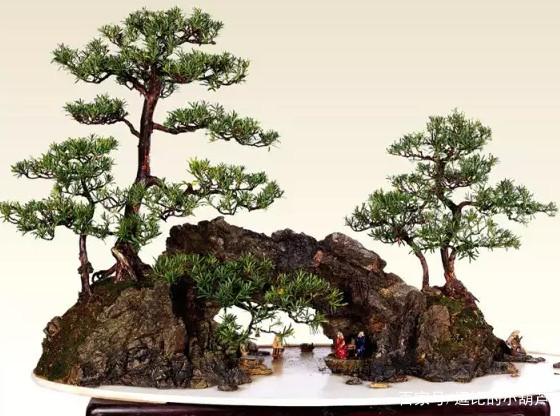
Introduction: Hello everyone, I am Little Gourd, welcome to read my article. Since ancient times, the benevolent love mountains, and the wise love water, and landscape bonsai, with the artistic conception of a small bonsai containing a big world, is loved by many people. Today Little Gourd shares with everyone some follow-up work after the landscape bonsai is completed, including accessory embellishment and later care.
First, choose the number of plants according to the artistic conception. Common tree species include five-pine, small-leaf small-leaf wash, glossy privet (Ligustrum lucidum), paired with larger rocks, herbaceous plants such as bamboo, cattail, ferns, etc., using small stones. Pay special attention to plants and rocks, tall and short. Consistent with the theme. Trees cannot be too dense or messy. Plants are usually planted in rock crevices, then rooted in soil, planted on moss, and some can also be planted in stone, looking like natural growth without artificial traces.
In addition to moss, moss is a very important matching material in mountain bonsai. The Qing Dynasty poet Zhang Chao had a poem: stones are not without moss; the principle of mountain stones being moss is that there are deep gullies on the shady side of the mountain. Brush it on the rocks, place them in a cool place, and spray water frequently to produce moss. Apart from this tree and moss, there are also accessories, such as pavilions, corridors, pavilions and towers, etc. There should not be too many spare parts, 2-3 pieces for small and medium-sized bonsai. The position of the accessories should conform to the rules of layout, the pagoda on the mountaintop, the mountain on the shop front. Ions, the ditches between small houses, matched according to the artistic conception.
In the care of garden bonsai, the care of garden bonsai is slightly higher than that of tree stump bonsai. In the care process of garden bonsai, the most important thing is the care of plants, especially woody plants in mountainous areas. Because the soil for planting plants in the mountain stones of landscape bonsai is little, and water is also relatively difficult, a little can cause the plants to dry out, so plants and rocks should be sprayed with water frequently to ensure the plants get the water they need. The same landscape potted soil is relatively little, and it is not easy to change the soil. The nutrients needed for plant growth are limited, so it is necessary to fertilize the plants. When fertilizing, thinner liquid fertilizer should be used.
In landscape bonsai, moss will always grow. Sometimes the moss grows rapidly and easily covers the original stone surface, lacking ornamental plants. This time, some unnecessary moss should be removed to maintain the original state. Other plants should be frequently trimmed, and the rocks rinsed, to remove dust. There is also the accumulation of dust and other things. In indoor landscapes, the landscapes of the four seasons should be preserved through the four seasons. In spring, summer, autumn and winter, potted plants need to be stored in spring, summer and autumn, and the pots replaced regularly to keep the water clean. In addition to regular water exchange, the pool should also be cleaned and washed regularly to prevent algae and other pollution.
Landscape bonsai can neither be exposed to direct sunlight nor rain, and attention should also be paid to windbreaks to prevent stones from cracking. It is recommended to place them indoors or in corridors or under eaves. Everyone who likes bonsai appreciates and loves beauty. The care process of bonsai is relatively long and requires patience and care. On the road of bonsai care, Little Gourd is willing to make progress together with everyone. If you like my article, you can leave a message and repost it.