Key Fertilization Periods and Scientific Fertilization Methods for Spring Vegetables
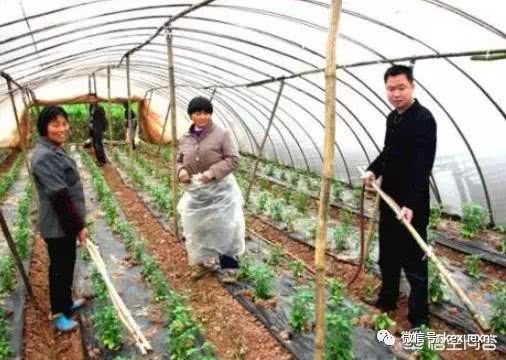
Spring is a key time for vegetable growth. Only by doing a good job in fertilization can vegetables grow well and later produce a bumper harvest. So how should scientific fertilization be done? Here, Kexue Xingnong would like to take this question as an opportunity to share with everyone some fertilization methods for high-yield vegetables, hoping it will be helpful to you.
1. Legume vegetables
Everyone knows that the roots of legume vegetables have rhizobia, and rhizobia have the function of nitrogen fixation, so legume vegetables require less nitrogen fertilizer during growth than other vegetables. However, in the early stage of legume vegetable growth, the effect of rhizobia is not yet very obvious, because at this time the rhizobia are not yet mature in growth and their effect is not great. Therefore, sufficient base fertilizer needs to be applied to the soil, which is more conducive to the early growth of legume vegetables. Organic fertilizer can be applied to the soil according to the soil conditions, and the organic fertilizer must be thoroughly decomposed, otherwise it is easy to cause root aging. In addition, although legume vegetables require less nitrogen fertilizer during growth, they require more potassium fertilizer, and they need an appropriate amount of phosphorus fertilizer to promote flowering and pod development in legume vegetables. Therefore, during the application of base fertilizer, attention should be paid to adding plant ash and calcium phosphate. Generally, about 100 kg of plant ash and about 20 kg of calcium phosphate are applied per mu. When legume vegetables reach the stage of faster growth, attention should be paid to timely topdressing, generally once every ten days. The topdressing generally uses urea and potassium oxide to promote flowering and pod formation.
2. Leafy vegetables
Leafy vegetables should be the vegetables we eat most often in daily life, such as Chinese cabbage, Chinese chives, spinach, etc. During the growth of leafy vegetables, the demand for nitrogen is relatively large. The root systems of leafy vegetables are relatively shallow, so the nutrients needed for daily growth can only be obtained from the shallow soil. This requires growers to topdress in a timely manner to ensure vegetable growth. Before planting, soil fertility also needs to be increased and sufficient base fertilizer applied. The base fertilizer generally uses organic fertilizer, and the amount of organic fertilizer used is determined according to soil fertility. Generally, about two tonnes of organic fertilizer are needed per mu, and about 100 jin of plant ash is also needed. During the growth period of leafy vegetables, the demand for nitrogen fertilizer and potassium fertilizer is relatively large. Generally, urea is added once after each harvest, with a usual amount of about 10 kg per mu.
3. Fruiting vegetables
Fruiting vegetables require more fertilizer during growth than the previous two types. Common fruiting vegetables include tomatoes, eggplants, peppers, and winter melons. During growth, they need nitrogen, phosphorus, potassium, calcium, and magnesium fertilizers. The base fertilizer aspect is roughly similar to the above fertilization methods. Because the flower bud differentiation of fruiting vegetables occurs earlier, nitrogen fertilizer and phosphorus fertilizer must be supplemented in time to prevent delayed flower bud differentiation. Generally, fruiting vegetables need topdressing three times during the growth period: once as flower-promoting fertilizer, once as fruit-promoting fertilizer, and once as full-fruit fertilizer. Usually, foliar fertilizer also needs to be supplemented in a timely manner according to the growth condition of the vegetables.
4. Root and tuber vegetables
Root and tuber vegetables include potatoes, radishes, sugar beets, etc. During the growth of root and tuber vegetables, the demand for potassium fertilizer is relatively large. Fertilization is also mainly a combination of base fertilizer and topdressing, and topdressing places more emphasis on early application. It should be noted that if too much nitrogen fertilizer is applied during fertilization, it is easy to cause excessive leaf growth and affect root and tuber growth. The topdressing time should be after the root and tuber vegetables are planted, applying about 5 kg of urea per mu to promote leaf growth of the plants. In the early stage of root and tuber formation, apply phosphorus and potassium fertilizer, with an amount of about 7 kg per mu, to promote root and tuber growth, prevent excessive leaf growth, and avoid affecting nutrient absorption by the roots and tubers. Spray the leaves of root and tuber vegetables with 1% urea water fertilizer, and spraying twice is sufficient.
In addition to the above fertilization points, the fertilization process also needs to combine soil fertility, local climate, vegetable growth habits, fertilizer properties, and other comprehensive conditions for scientific and reasonable fertilization.
The above questions about fertilization come from Kexue Xingnong, and I hope they are helpful to you.