What kind of carnivorous plant is the Cape sundew?
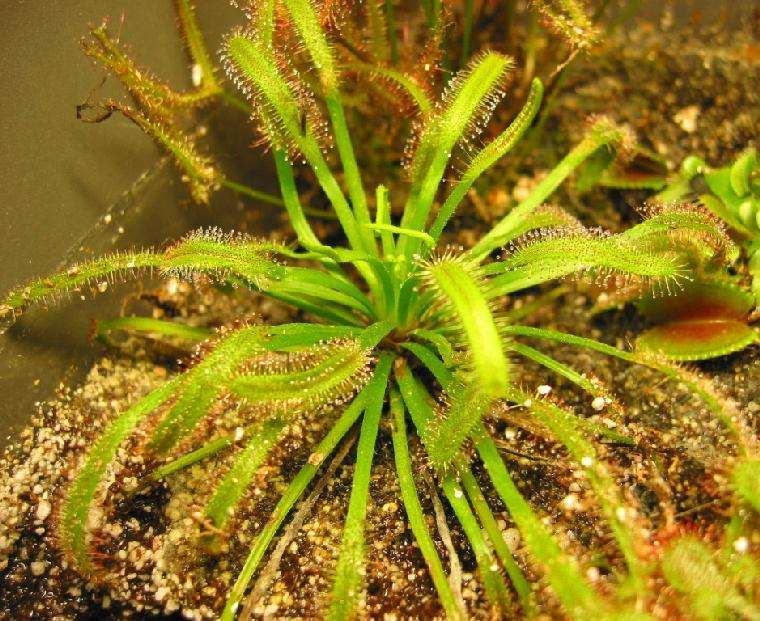
The Cape sundew is a carnivorous plant that grows in South Africa. The Cape sundew is more effective than the Venus flytrap, because it is covered with sticky tentacles that lie in wait to capture insects landing on it, making it a standout among the world's more than 90 species of carnivorous plants, and it has long enjoyed the reputation of "king of hunters" in the plant kingdom. This rare plant is native to Cape Province in South Africa.
Cape sundew
Drosera capensis, commonly known as the Cape sundew, is a carnivorous plant that grows in South Africa. Its stem usually grows to a height of a few centimeters, bearing slender leaves. This plant gradually produces many alluring flowers and sticky tentacles, waiting to capture prey. This particular plant is native to Cape Province in South Africa.
Cape sundew
The Cape sundew is an all-red form; under sufficient light, the entire plant turns red. Although this variety is already mass-produced abroad, many growing enthusiasts in China still know it only from books and online pictures.
Cape sundew
Watering requires water with low mineral content (such as rainwater, purified water, etc.). It is suitable to grow it using the tray method, supplying water from the bottom of the pot; avoid frequently spraying water on the plant, so that the mucus on the glandular hairs is not washed away; light makes the plant grow more robust and gives it vivid color; in summer, pay attention to cooling, as too high a temperature will cause dormancy and the leaves will wither. At this point, do not discard it; keep the substrate moist, and in autumn new shoots will sprout from the root crown; if fertilization is needed, spray at more than 1/5 of the indicated concentration.
Cape sundew
The tuberous root of this plant (sundew root) is also used medicinally. It is collected in May-June, used fresh or dried in the sun. The whole plant contains various quinone compounds such as plumbagin, droserone, hydroxynaphthoquinone, and hydrogenated naphthoquinone. The glandular hair secretions contain a protease similar to trypsin.