How do you get rid of clover when it takes over your yard? These tips keep the grass growing neat and even
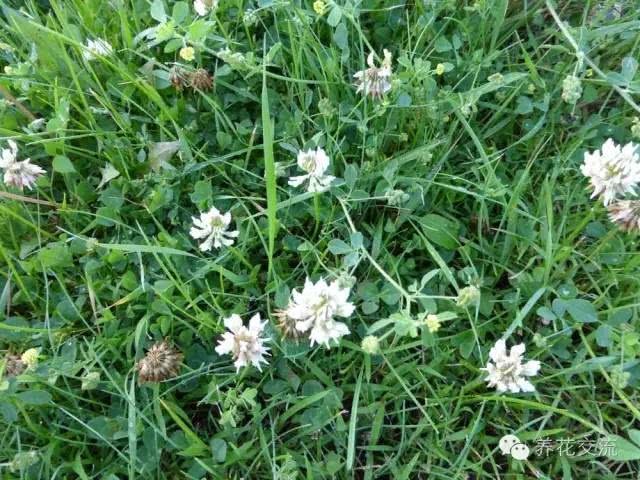
Today a gardening friend asked: There are always some weeds with small white flowers on my lawn, three leaves joined together, spread all over.
Their roots and stems are tangled and crisscrossing through the grassy area, and it seems no matter how much I pull them, I can never pull them all out, and they never die, and they come back at this time every year. How do I get rid of them and keep the lawn intact?
Many gardening friends have probably seen this plant. It looks a lot like shamrock, also with three leaves, but the flowers are different.
This white-flowered three-leaf clover she sent is called "alfalfa" (Medicago), and it belongs to the wood sorrel family (you can also call it shamrock).
Sometimes this kind of clover becomes especially rampant, growing in one big patch at a time, and this is related to how its seeds spread.
This clover has very shallow roots and is an annual. To remove it you must pull it out roots and all, but if you do a good job of prevention, it will not come back next year.
Prevention means using corn gluten in early spring and autumn, or a fertilizer containing corn gluten (sold at farm supply stores, usually as feed). Corn gluten meal can effectively inhibit the growth of the radicle when plant seeds sprout, thereby suppressing weed reproduction.
In fact, many gardening friends with yards should know about this: corn gluten meal - the nemesis of weeds. In addition, reseeding the lawn every year can also eliminate it.
Also, strictly speaking, clover is not an absolute weed, because ordinary grass seed mixes usually contain a certain proportion of clover, the reason being that it grows easily and is highly adaptable. So if clover makes up no more than 20 percent of your lawn, you can leave it alone.
The reason clover appears in lawns is mainly that the lawn lacks nitrogen fertilizer, so to prevent it, you must usually apply enough nitrogen fertilizer.
In addition, clover has its advantages. It actually belongs to the legume family and has a special ability: it produces nitrogen fertilizer and stores it in the soil. So you can plant clover in a vegetable garden, then plant vegetables a few months later - it is a very good organic crop.
As mentioned earlier, clover has shallow roots, so removing it by hand is not difficult. But you must remove it roots and all. Another way to remove it is to first pull it out by hand, or with a fairly stiff metal rake, working hard to clear it, then spread compost soil or potting soil (best to buy soil that does not contain weed seeds) over the ground where the weeds grew, and then sow grass seed, so that when the new grass grows it will smother the weeds. (When removing, even if you do not clear it completely, it does not matter.)
So reseeding the lawn every year is also a way to eliminate clover. But when choosing grass seed, choose seed mixes with a larger proportion of perennial grass species.
In addition, do not cut the grass too short when mowing. Cutting it too short makes it hard to retain water and moisture, the grass dries out easily, and then weeds appear easily, especially shallow-rooted weeds.
In many places alfalfa was once used as food: blanch it in hot water, then serve it cold dressed with sauce, and it tastes excellent.