Practical Aloe Vera Care Tips and Notes on Treating Burns and Beauty Uses
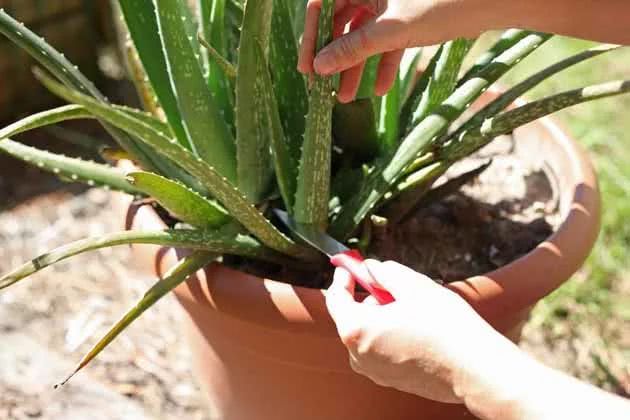
Aloe vera is a tropical plant, but you can also grow it in cold winter places, as it stays warm indoors.
Aloe vera is a succulent, its leaves are full of water, and it loves dry, warm environments and hates dampness and cold most of all. Keep the soil slightly dry and your aloe vera will absolutely not die.
1. Light
Keep aloe vera in a sunny spot, such as a sunny kitchen window or a sun-filled balcony; it will not grow well in a semi-shady spot indoors. (6-8 hours of light per day)
Aloe vera can also grow healthily in indirect light, but in a shaded room or under tree shade it cannot thrive, so make sure your room has sunlight before growing it.
Note: if there is no frost outdoors, it can stay outside all the time. Aloe vera is 95% water, and even a slight frost will freeze it into mush.
2. Water with caution
Aloe vera does not need much care and does not need much water. Be sure to wait until the soil is completely dry before watering. (When the soil 5 cm down from the pot surface is dry, you can water it thoroughly)
On sunny days, it generally dries out in about a week and a half, but winter or rainy days are exceptions.
If your aloe vera was just planted, it is recommended to wait two or three days before watering; the roots need time to adapt to the new soil.
If you are not sure whether the soil is completely dry, you can wait another two days before watering. Watering too little a few times will not kill it, but watering too much will rot the roots.
3. Fertilize during the growing season
The growing season is generally from April to September, when they grow vigorously. You can give a little light fertilizer, once a month, a diluted thin liquid fertilizer. Do not let the fertilizer water remain on the leaves or in the leaf center.
Do not fertilize in winter, and do not fertilize when summer is too hot.
4. Notes on repotting
If the potted aloe vera you just bought is unstable in its pot and feels like it has no room to grow, then repotting is a good method. You can transplant it into a larger pot so it has more room to grow, but be even more careful to water only when the soil is dry.
If the potted aloe vera's bottom drainage hole is large and the pot is big enough, then there is no need to transplant frequently; just change the soil once every two years.
5. Soil choice
Aloe vera, like some cacti, prefers dry sandy soil. You cannot use water-retaining soil, otherwise the roots easily become waterlogged and rot.
A 1:1 mix of peat moss and perlite is also suitable for growing aloe vera. Just like growing succulents, do not let the soil stay wet all the time; well-draining soil is key.
6. Choosing pot size
After growing for a while, the aloe vera's roots will bind the soil in the pot into a root ball. Once the roots have filled the pot, you need to choose a larger pot.
Generally, it needs repotting after one year of growth. For the aloe vera above, the roots have already filled the pot, so you can consider moving it to a slightly larger pot.
When replanting, if the root crown is not yet stable, you can add more soil around the edges and gently press it down with your hands.
7. Add small pebbles
It is recommended not to place too-fine colored decorative stones, as they hinder root respiration and will fade. Place small pebbles or similar decorations and press them lightly into the soil.
8. Propagating aloe vera pups
Division is the main propagation method for aloe vera. If your aloe vera has grown pups, once they reach 3-4 cm they can be separated from the mother plant; be careful not to damage the roots.
After dividing, clean the pups, place them on a dry, cool shelf, let the roots air-dry for 2 days, then plant them in new potting soil and water after three days.
Whether or not the pups have roots, they can be propagated; just do not water too much in the first few weeks after planting, and if dry, spray a little water.
10. Using aloe vera plants to treat burns
Aloe vera plants can effectively relieve sunburn, and of course they are also effective for other types of mild burns.
If you go out in the sun for a day and your skin is sunburned and red, you can apply aloe vera juice to your skin, or squeeze the gel from a leaf onto your hand and rub it on. Try it a few times and the marks will disappear too.
You can put a cut leaf in the refrigerator to cool it down, then rub it on your wound.
But be careful not to apply aloe vera to open cuts, especially serious ones that are not surface wounds; use it only for burns on the skin surface. For serious burns, you should still see a doctor.
11. Aloe vera beauty, hair conditioner and soap
Aloe vera gel is a great natural moisturizer. It can make the skin better, provided of course that you are not sensitive to aloe vera and will not have an allergic reaction. You can apply aloe vera gel to your skin to moisturize or mix it with other skincare ingredients.
12. Below are common aloe vera beauty methods:
(1) Aloe vera face mask:Mix 1 teaspoon of aloe vera gel, 1 teaspoon of honey and 1 teaspoon of cosmetic clay, apply to your face for 15 minutes, then rinse.
(2) Aloe vera hair conditioner:Mix 1 teaspoon of aloe vera gel, 1 teaspoon of olive oil and 1 teaspoon of honey, apply to your hair for 1 hour until your hair is smooth, then shampoo and rinse as usual.
(3) Aloe vera skincare cream:Mix 1 teaspoon of aloe vera gel and 1 teaspoon of coconut oil, and apply it to your hands and feet. (Note: do not use if your skin is sensitive to aloe vera)