Aloe polyphylla is expensive, and its seeds cost even more than common aloe seeds.
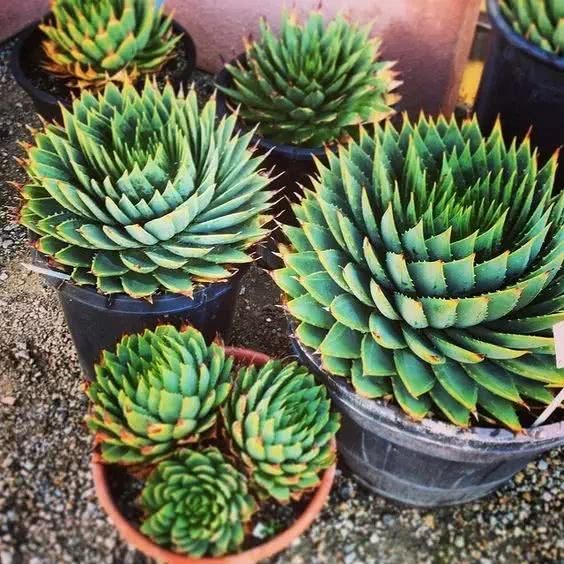
The Aloe polyphylla introduced below is a very regularly shaped medium-to-large aloe (also called spiral aloe). It is now a rare plant, and digging it up illegally in its native habitat is prohibited, otherwise it is a serious criminal offense, and illegal import is also not allowed. Gardeners can only buy its small seeds and grow them slowly.
Do not assume it is rare because it is difficult to grow. In fact, it is very cold-tolerant, drought-tolerant, heat-tolerant, and tolerant of poor soil, and it is a winter-growing type of alpine aloe.
Many gardeners have told me that they bought fake seeds, and being cheated has become commonplace, because you cannot even find its real seeds online, nor can you learn the truth. Below are the various forms of Aloe polyphylla.
But the ones above were just harvested and still have their husks. So what do Aloe polyphylla seeds look like with the husks removed?
These seeds are also very small. They look a bit like little beans, and compared with other small flower seeds, they are slightly larger.
Some gardeners have also bought Aloe polyphylla seedlings through proper channels. What do they look like?
Its seedlings look very sturdy, giving people a sense of robustness.
Sowing is generally done in autumn, and temperatures between 10 and 30 degrees are all acceptable, because Aloe polyphylla likes a cool climate with a large temperature difference. Ideally, 25 to 30 degrees during the day and 10 to 15 degrees at night is the best temperature.
It is recommended to buy seedling trays for raising seedlings. You already bought such expensive Aloe polyphylla seeds, so can you really skimp on a seedling tray?
Use gauze mesh as a bottom liner, mix 1-3 mm akadama soil with peat soil for raising seedlings, lightly sterilize the seedling soil by soaking it directly in carbendazim, let it dry, then level the soil before sowing, and keep the potting soil slightly moist. You need to keep bottom-watering constantly; watering from above will wash the seeds away.
Before and after the seeds germinate, use bottom-watering to keep them moist. Many gardeners say their seedlings tend to fall over as soon as they are watered, so your watering method is wrong. Let the water slowly seep in from the bottom.
For the sowing method, spot sowing is recommended. Use a moistened toothpick to sow them one by one, and wear a mask to prevent the seeds from being blown away.
Because Aloe polyphylla seeds are small, they must not be covered with soil. Cover with plastic film, then wait patiently!
(Its root system is very strong.)
During germination, they can receive a little light through a window, but they must not be put outside in direct sun. Generally they can germinate in a week. After germination, remove the film and gradually let them receive more light.
Remember that while the film is on, you need to uncover it for 2-3 hours every day to ventilate and check the seed germination situation. (Remove mold promptly if found, and sprinkle a little carbendazim powder on it.)
Sometimes they do not germinate for a long time, but you still need to wait. Some germinate after half a month.
Absolutely do not fertilize during germination and the seedling stage!
(Aloe polyphylla takes 10 years to bloom for the first time, and it grows especially slowly.)
Let them grow slowly, and transplant them once they are big enough. I wait until the seedling tray can no longer hold them before transplanting.