Jasmine just bought, repotting is simple, acclimation is fast, and it blooms quickly
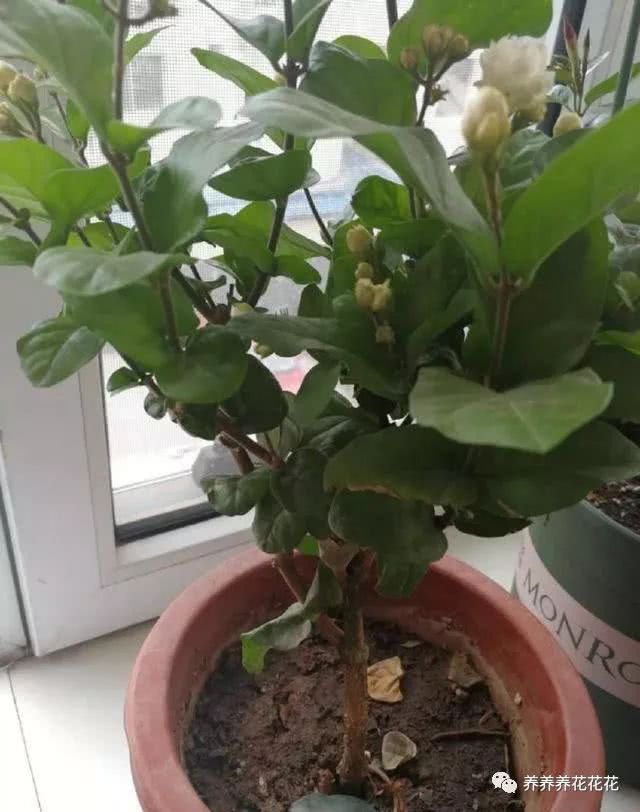
For jasmine bought from the flower market, keeping its original pot and soil, when is the right time to repot? Xiao Qi will briefly explain.
Jasmine bought from the flower market. It generally comes in its original pot. Since the jasmine currently has flower buds. If the leaves are still glossy green and the condition is still good, there is no need to repot right away. You bought the flowers to enjoy the blooms. You can absolutely wait until it finishes flowering before repotting it. During this period, water must never be lacking, and give it plenty of light. Until its flowers fade, then we start repotting it.
Pruning
The first thing to do after jasmine finishes flowering is to prune. The principle of pruning is to keep two to three nodes of each branch. Cut off the excess. Since you just bought it, any branches inside that are too dense or thin and weak must all be cut off. If weak branches are not cut off. They will affect its growth, and it will not bloom much either. So, they must be cut off! The cut-off parts can be used for cuttings, and the survival rate is very good too. Since jasmine blooms all year round, as long as the temperature is sufficient. It keeps growing branches and keeps blooming. If branches are not cut back in time, its branches will grow leggy. The longer they grow, the leaves at the bottom all fall off, and the overall shape will not look good. So you must cut back the branches and prune frequently.
Removing from the pot
Jasmine grown in greenhouses is generally planted in garden soil or yellow clay soil. When repotting it, try as much as possible to remove the original soil. Because the yellow clay no longer has nutrients. And its soil has already noticeably compacted. You can take it out of the pot and rinse off the original soil with a faucet, or just soak it in water to wash it off. Try to damage the roots as little as possible, and use a suitable pot to plant it.
Mixing the soil
Since jasmine likes acidic soil. When mixing the soil, try to add a portion of pine needle soil. Pine needle soil contains certain acidic substances. It can continuously supply the iron element it needs for growth, so you do not have to keep supplementing ferrous sulfate. The soil should be as loose and breathable as possible. You can use four parts leaf mold, one part pine needle soil, 1 part river sand, and if you have coal cinders, add one part coal cinders. Mixing it this way is very good. It is both loose and breathable and contains nutrients.
Potting
This is the most critical step. Find a suitable pot and try to choose a breathable clay pot. Place a piece of tile over the drainage hole, then put a layer of the mixed soil at the bottom. If you have organic fertilizer on hand, decomposed cow manure or sheep manure will both work. Spread a layer of organic fertilizer, then add another layer of soil. Pick up the jasmine plant, spread its roots out flat on the soil surface, gradually fill in the soil, firm the soil, and water thoroughly to settle the roots. Find a slightly larger plastic bag, support it around the pot with wooden sticks and slip the plastic bag over it. Poke a few holes in the bag, move the pot to a cool, ventilated place, and start the acclimation process.
Acclimation successful
Until you see new branches growing. Once the branches have grown more than two pairs of leaves. Gradually remove the plastic bag. Open part of it one day, then open another part the next day, so it has a process of adapting to the air environment. Then gradually remove it completely, place it in a bright spot, and gradually expose it to the sun so the leaves adapt to the light, and then you can care for it normally. At this point, your repotting and acclimation has been completely successful.
If you like growing flowers, followWeChat public account: Growing Flowers and Plants (hcqzj521)More flower-growing knowledge is waiting for you