How to repot tree bonsai? Detailed methods and precautions
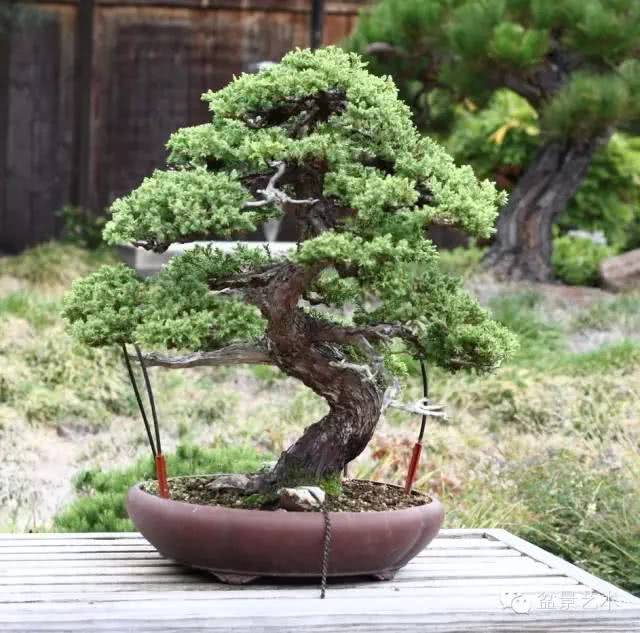
Generally, small bonsai are repotted once every 1 to 2 years, medium bonsai once every 2 to 3 years, and large bonsai once every 3 to 5 years. For old stump bonsai, repotting can be done after several more years.
For tree species that grow vigorously and like fertilizer, repotting should be done more often, with shorter intervals; for tree species that grow slowly and need less fertilizer, repotting can be done less often, with longer intervals. Old stump bonsai of the pine and cypress type should not be repotted too often.
Tree species with lush branches and leaves and well-developed root systems should be repotted frequently. Repotting can be determined by the condition of root growth. When the potting soil is neither dry nor wet, turn the pot upside down and pat the bottom of the pot with your hand so that the tree, soil and roots all come out. Check the condition of soil clod compaction and root distribution. If the soil clod is compacted and the roots densely cover the bottom surface of the clod, it means repotting is necessary.
The best time for repotting is when the tree is in its dormant period, mostly in early spring or late autumn. If a relatively large amount of the original soil is retained, repotting can be done at any time, without seasonal restrictions. If most or all of the old soil needs to be replaced, the appropriate repotting period should be strictly chosen.
Placement and protection
The placement of stump bonsai should also be determined according to the characteristics of the tree species. Generally, it should be placed in a ventilated and well-lit place, with a certain amount of spatial humidity. Insufficient sunlight, poor ventilation, and no certain spatial humidity can cause the plant to turn yellow and dry out, leading to pest and disease problems, and even death. However, some tree species prefer shade, and some stumps need a little more sunlight, so measures such as shading or light blocking should be taken. For example, some evergreen broad-leaved or non-broad-leaved tree species such as boxwood, azalea, and camellia mostly prefer shade, while crape myrtle, ginkgo, and crabapple prefer sunlight, so this should be determined according to the specific situation. Some stump bonsai are also cold-tolerant or not cold-tolerant. Non-cold-tolerant stumps generally need to be moved into a greenhouse for maintenance and management in winter, such as banyan and Fujian tea.