A Detailed Guide to the Cultivation Techniques and Application Points of Dwarf Crape Myrtle
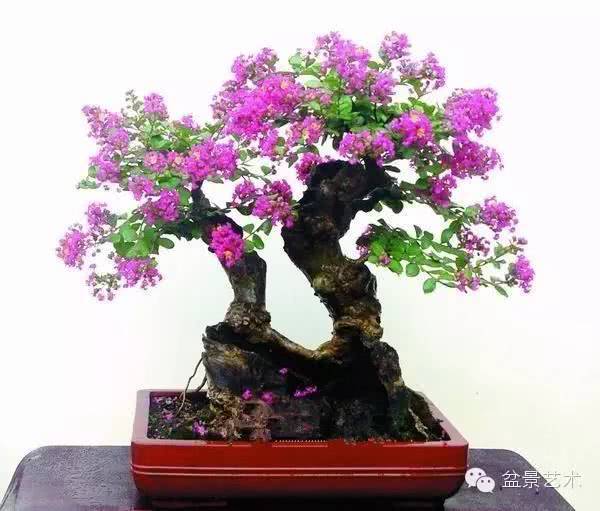
Dwarf crape myrtle (Lagerstroemia indica) prefers a warm, humid climate and is resistant to cold, drought, waterlogging, salt and alkali, and harmful gases, making it suitable for a wide range of planting regions. Based on its open-field cultivation in Henan, both large seedlings and current-year small seedlings can overwinter safely. Stems with a high degree of lignification can withstand low temperatures of minus 20°C. The most suitable growth temperature is 15°C to 40°C, and it can be planted in the open ground in most parts of the country.
Propagation Methods and Cultivation Management
Propagation is commonly done by sowing or cuttings, and can also be done by division and layering.
Sowing: Harvest the black-brown seeds in November and sow them in the spring of the following year from March to April, with a germination rate of over 90%. The seed germination temperature is 15°C to 25°C. After sowing, cover with about 5 mm of soil, cover with plastic film, and keep warm and moist.
Cuttings: There are two methods: hardwood cuttings in spring and softwood cuttings in summer. In spring, select robust, pest-free one-year-old branches and take cuttings before bud break. In the field, choose a sheltered, sunny spot to make a bed. The cuttings are 15 cm long and inserted 10 cm into the soil. After planting, water thoroughly, cover with plastic film, and keep warm and moist. Roots and shoots can form after one month.
For summer cuttings, make a bed on sandy loam soil and cut current-year branches of about 10 cm, keeping 3 to 4 small leaves on top. Open a furrow with a plant-to-row spacing of 3 x 10 cm, insert half of the cutting into the soil, water thoroughly, and cover with a shade net to retain moisture. Depending on the weather, spray water on the branches or water the bed to prevent the soil from drying out and the branches from lacking water. Roots can form in about half a month, and the survival rate can reach over 95%.
Dwarf crape myrtle is drought-tolerant and waterlogging-tolerant, and its management is relatively extensive. One-year-old seedlings are tender, and moist soil is beneficial to seedling growth, so they should be watered frequently. Perennial seedlings only need fertilizing in spring and winter, while young seedlings should be given nitrogen fertilizer and compound fertilizer during the growing season to accelerate growth. With a suitable planting density, diseases generally do not occur. Prune in spring, keeping 2 to 3 robust buds on each branch and cutting off the rest. Pruning should be done every spring, especially the retracted parts of the branches, which must be cut off.
Dwarf crape myrtle is usually transplanted before bud break in spring. Because of its well-developed root system, it can also be transplanted during the growing season with shading measures, and the survival rate is as high as over 90%.
Landscape Greening Applications
Dwarf crape myrtle has a well-developed root system, likes warmth and tolerates cold, likes moisture and tolerates drought, likes fertile soil and tolerates poor soil, tolerates salt and alkali, and resists harmful gases. Moreover, its flowers are brightly colored and it can bloom abundantly even in the hot summer. Its plant form is short and compact, and it can be planted in the ground or in pots, giving it a wide range of landscape greening uses.
1. Used as large green belts and slope-protection vegetation. It can be used as a planting tree species for green belts, isolation belts, slope protection, and sand-fixation vegetation along highways, railways, embankments, and river slopes. It can also be used as a planting tree species for hedges and color blocks in the greening and beautification of mining areas, residential communities, and scenic tourist areas. It is especially the preferred flowering shrub species for greening large and medium-sized cities and industrial and mining areas where harmful gases exceed standards.
2. Used as flowerbed plant arrangements. Many woody plants planted in flowerbeds bloom less in summer. For example, dotting in dozens of plants or several dwarf crape myrtles to form color blocks, or pruning them into various shapes of combined flower blocks, can greatly improve the landscape effect. Of course, they can also be planted as single plants, naturally forming flower balls.
3. Making various shapes. For high-standard crape myrtle, select local high-standard crape myrtle of a certain height and thickness as rootstock, take dwarfed crape myrtle as scion for grafting, and combine with pruning to cultivate spherical, umbrella-shaped, pagoda-shaped, and weeping-branch flower crowns. According to the characteristic of vigorous growth of dwarf crape myrtle, it can also be pruned into flower columns, geometric shapes, animal shapes, or woven into dwarf crape myrtle flower screens, etc.