A Detailed Guide to Forest Bonsai Layout Techniques and Creation Methods
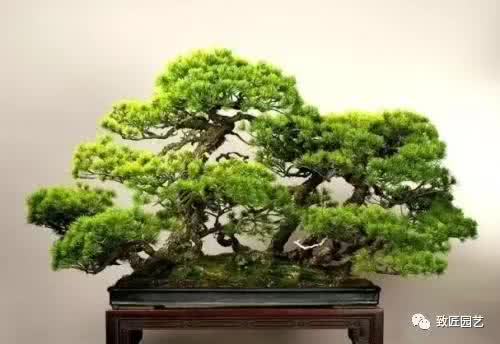
Everything is a unity of opposites. All principles of artistic composition conform to the law of the unity of opposites. The combination of organic unity and complex diversity is the principle of unity in diversity, the dominant principle of aesthetic form. The key to bonsai composition lies in layout (also called composition). The basic principle of all composition is balance, which includes change and unity. Forest bonsai is precisely the study of how many trees live together, how they get along, and how to display collective beauty on the basis of individual beauty.
This is the key to forest bonsai composition. In a word, it is about studying the relationships between trees - between the whole and the parts, between one part and another, and between this tree and that tree. This urgently requires us to apply the law of change and unity, so that the forms formed by combining many trees conform to the law of balance in composition and the laws of all formal structural beauty. Painting uses the surface of paper as the picture plane for composition, while bonsai uses the height of the trees (or stones) and the width of the pot to form an imagined picture plane for layout. We must fully grasp the law of balance, so that the forest scenery combines change within unity and the picture composition achieves an artistic effect that is both diverse and unified. Balance means that the visual images on the picture plane are compared by the weight of objects, with the center of the picture as the fulcrum, and the balance of weight is used to compare the balance of the picture, so as to achieve symmetry in asymmetry and balance in imbalance. The weight of a visual image is measured according to the size of its area, the depth of its color, and the influence people's lives give to potential consciousness in thought, such as: people are heavier than animals, animals are heavier than plants, movement is heavier than stillness, diagonal lines are heavier than vertical and horizontal lines, and things farther from the fulcrum (the center of the picture) are heavier than those closer.
When objects are in a state of parallel alignment, symmetry, and balance, they appear unified but lack variation. If only variation is sought and unity is not, then disorder appears. Therefore, being both diverse and unified is the basic principle of all excellent composition. For example, if three trees are arranged in parallel, there is only unity and little variation, so it appears rigid; if three trees are placed randomly, it is chaotic and disorderly. Therefore, two trees must be unified and one tree varied, two trees gathered and one tree scattered, creating on the whole an artistic effect that is both varied and unified. This is the basic law of balance and unity in diversity. According to this principle, when seeking an object image that is unbalanced in formal feeling but balanced in quantitative feeling, a series of contradictions arises, such as empty and solid, light and heavy, sparse and dense, gathering and scattering, and so on. In the past, in studying the common laws of dynamic bonsai composition, we proposed 32 dialectical principles of art. Most of these principles apply to the composition of single trees, while for guiding the composition of forest bonsai they all apply.
In particular, whole and part, host and guest, contention and yielding, looking back and looking forward, hiding and revealing, empty and solid, heavy and light, movement and stillness, level and extraordinary, complex and simple, and so on, are all key to comprehensively handling the relationships between trees, and all require us to grasp them earnestly and apply them in practice. If forest bonsai does not speak of "having heaven above and earth below," then above there is no sky or sun and below there is no place to stand; if it does not speak of sparse and dense, gathering and scattering, then it is flat and monotonous, without a sense of balance; if it does not speak of hiding and revealing, covering and concealing, then everything is seen at a glance, empty and without substance; if it does not speak of large and small, far and near, then the whole pot grows chaotically, without distinction of layers. Without movement and stillness, danger and stability, it is rigid and lifeless; without facing and backing, tension and relaxation, the direction is unclear and movement and stillness are not distinguished; without contention and yielding, interlacing and insertion, it cannot conform to natural principles; without looking back and looking forward, supporting and carrying, it is difficult to express the author's feelings. If host and guest are not distinguished, it is like a disorderly mob; if the main subject is not highlighted, the responsibilities of each part are unclear. Therefore, the whole needs unity, and on the basis of unity seek variation, "seeking the extraordinary within the ordinary"; the parts vary, and within variation seek unity, "seeking order within disorder." This achieves the artistic effect of harmonious unity between the whole and the parts. The organization method of forest bonsai: everything is full of contradictions. We must grasp the principal contradiction, fully understand their dialectical relationships, in which they contrast with each other, transform into each other, restrict each other, and depend on each other. All conclusions are always drawn through mutual comparison. The organization method of forest bonsai can also be demonstrated in practice only through the study of typical things. If two trees are compared, they can only show distinctions of top and bottom, left and right, front and back, large and small, far and near, dense and light, but cannot show the differences of sparse and dense, gathering and scattering, hiding and revealing, empty and solid. Only when three trees are compared, through the mutual transformation and mutual dependence of contradictions, can the above effects be displayed. Therefore, in studying the combinatorial variation of forest bonsai, it is appropriate to use at least a combination of three trees, because it has the basic characteristics of contradictory change and is full of the philosophy of unity in diversity. Once the "three-tree combination method" is understood, then combinations of five trees, seven trees, or even many trees can all be comprehended by analogy. This is what is meant by drawing inferences from one instance and using the few to defeat the many.
Layout
Layout is extremely important; it is the key to the success or failure of creating forest-style bonsai. The position of the main tree should be determined first, then the positions of the secondary tree and the accompanying tree should be considered. The main tree should be about 1/3 of the way to the left or right side of the pot, slightly toward the front or back, and should not be in the exact center or at the edge of the pot. In the exact center it is too rigid, and at the edge it appears unstable. The secondary tree is on the other side of the main tree, at a relatively greater distance. The accompanying tree is beside the main tree, at a relatively closer distance. If the planting points of the three trees are connected, they should form a scalene triangle. Using three trees as the foundation, planting multiple trees together is a flexible variation on the three-tree foundation, and one should try as much as possible to avoid having three trees on the same straight line. The number of trees in forest-style bonsai should preferably be an odd number. Before planting, the trees should be trial-placed in the pot several times, striving to place each tree in the best position. When planting multiple trees together, attention should be paid to handling the relationships between main and secondary, sparse and dense, empty and solid, high and low, far and near, movement and stillness, exposed and hidden, contention and yielding, and so on, striving to achieve clear distinction between main and secondary, appropriate sparseness and density, uneven heights, suitable movement and stillness, and both revelation and concealment. The work should have a strong sense of overall unity, being both coordinated and unified while also rich in variation.
Four Taboos in the Cultivation and Styling of Forest Bonsai
First taboo: uniform sizing. The materials used in forest-style bonsai are generally small-leaved shrubs, such as Tiger Thorn (Damnacanthus indicus), Chinese Plum Yew (Sageretia thea), Caragana (Caragana sinica), Serissa (Serissa japonica), and so on. When potting these small-leaved tree species, the sizes must be matched appropriately. They must not be similar in height and thickness; variation should be sought. Among many tree stumps, it is not appropriate for them to be similar in size and close in height, otherwise the landscape will inevitably be rigid, lacking vitality, and certainly without charming "wild charm" to speak of.
Second taboo: so dense that no wind can pass through. Several trunks in a forest or bonsai form a forest, and this forest is not comparable to a primeval forest. If it is so dense that no wind can pass through, it will affect the ornamental effect. Several tree stumps should have advance and retreat, bowing and yielding, and cause the space to vary in sparseness and density, with compact places where even a needle cannot be inserted and open places where a horse can run and a boat can sail. In this way, undulation and variation are produced in the composition, and only then will the formed landscape produce artistic charm.
Third taboo: deep pots and large vessels. In general, forest bonsai should display the wild charm of the forest and the scenery of the open wilderness, so deep pots and large vessels are not suitable. If the pot is deep, the trees appear small, and the displayed space is also relatively narrow. If the pot is shallow, the trees appear tall and the space becomes relatively large, giving a more profound visual effect. Moreover, using a shallow pot for planting also allows stones to be arranged on piled-up soil slopes, making the foundation uneven in height and the picture more vivid and lively.
Fourth taboo: no pruning. Forest-style stump bonsai often consists of several trees arranged into one scene, and besides their own unique forms, these trees also have overall relationships among one another, changes in the gaps between trees, and so on, thereby forming a complete composition. In addition, most of these small-leaved shrubs are fast-growing species with strong sprouting ability in normal times. If they are not pruned for a long time, branches often grow wildly and become tangled. If they are to be trimmed again later, a great deal of effort is required. Therefore, only by paying attention to pruning at all times can their ornamental value be guaranteed.
Highlights