A handful of clay can actually grow such beautiful plants
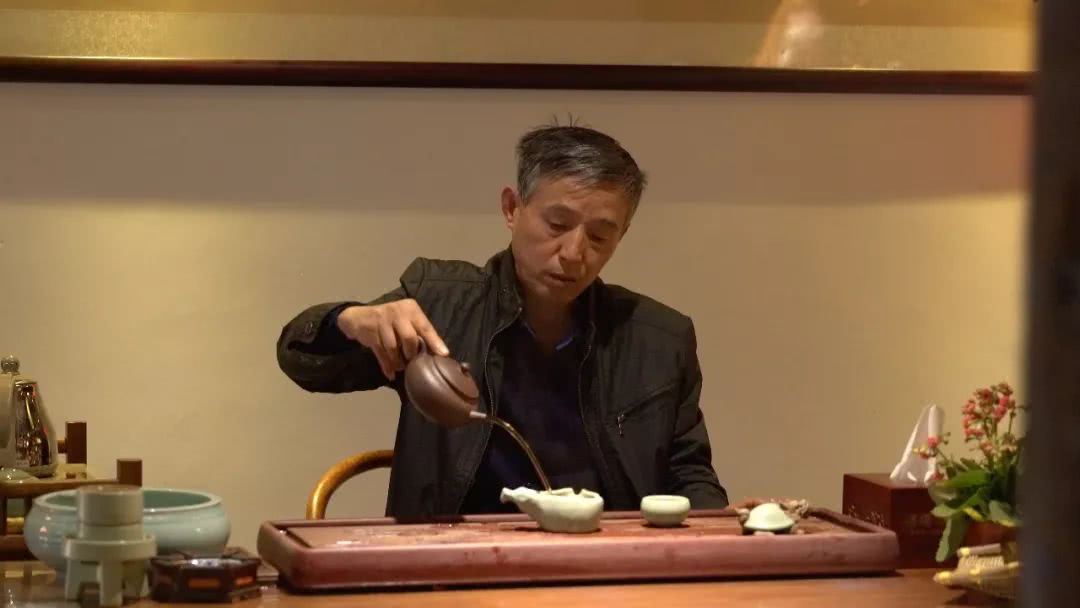
Hello everyone, I'm Cheng Jiping. I've focused on purely handmade zisha (purple clay) for over 50 years and I'm also a seasoned tea lover, a native of Dingshu Town, Yixing, Jiangsu, China. My ancestors all made zisha teapots. My mother-in-law is Bao Xiuyun, one of Master Gu Jingzhou's beloved disciples; she made teapots at Factory No. 1 alongside Xu Hantang, Zhou Guizhen and Li Changhong, under Master Gu's guidance.
The zisha teapot carries the Chinese tradition of the unity of tea and Zen. Making zisha is not merely a skill, but a blessing and a form of devotion. I have always believed that helping teapot lovers buy genuine, good zisha teapots is itself cultivating character and mind, and accumulating blessings and virtue.
Insist on making truly Yixing zisha
Insist on traditional handcrafting techniques
If you are interested in zisha culture
If you want to know how to buy genuine zisha
Or long-press to scan the QR code below
Zisha teapot culture
One very important reason why zisha teapot art originated, developed and became famous in Yixing is its unique, high-quality zisha clay, renowned throughout the world. There are many places that produce zisha, so why are Yixing zisha teapots so famous? It is not just the exquisite craftsmanship and the many masters it has produced. The real reason is that the zisha produced in Yixing is of fine quality with a high iron content; once fired into vessels, it has good water absorption and air permeability, so tea brewed in it is excellent in color, aroma and taste. Therefore, the first standard for judging whether a teapot is good is the clay: is it authentic Yixing original-mine zisha?
The beautiful small city of Yixing carries the dreams of teapot makers; it is both life and love. Rather than making teapots, it is passing on a craft...
Thanks to nature's gift, which used its countless scars to create wealth for the world. China is proud of zisha, and Yixing is proud of you.
In my own backyard, the old house is full of purchased raw zisha ore; after sorting, it is all piled here to weather in the open air, and over time weeds have grown all over it.
The world of zisha
When talking about zisha teapots, one cannot fail to mention the great master of zisha, Gu Jingzhou, my mother-in-law's mentor. In zisha teapot auction records, 9 of the top 10 highest-priced zisha teapots are works by Master Gu Jingzhou. Among them, the top-ranked "Squirrel and Grape Ten-Piece Tea Set" sold for as much as 92 million yuan.
These high zisha prices deter many teapot lovers who admire zisha teapots. But in recent years, under government management, the zisha market has become increasingly standardized, and zisha prices now follow a fairly detailed pricing system. I hope you choose my zisha works not merely because of business, but because I cannot stand today's mixed and chaotic zisha market.
Benefits of drinking tea from a zisha teapot
1. Yixing zisha teapots are "fired into pottery at a thousand degrees." The teapot contains many spiral, two-way circulating air pores; a good zisha teapot can reach a porosity of fifty percent.
2. Compared with metal vessels such as gold, silver, copper and tin, Yixing zisha teapots contain no metallic off-flavors whatsoever.
3. A zisha teapot can purify water quality. If tea is stored in a Yixing zisha teapot, even in midsummer it will not turn sour by the next day and can still be drunk.
4. According to scientific research, when brewing tea at high temperature, a Yixing zisha teapot releases trace minerals the human body needs, such as iron, calcium and sodium, which are very beneficial to human health.
Purely handmade teapots
Material selection
The clay I use now is all original ore material from Huanglong Mountain stockpiled by my father's and grandfather's generations; nowadays you could say every bit used is one bit less. Our teapots are all made from clay refined from this original ore, guaranteeing genuine zisha and rejecting chemical materials.
A well-aged clay block has air inside it and needs to be left to dry overnight. Before slicing, the air in the clay must be knocked out to avoid bubbles forming during the later firing of the teapot body.
Beating clay strips · Cutting clay sheets
Raising the body · Paddling the body · Smoothing the body
Making the spout · handle · lid
After the raw piece is dried in the shade for a period, it can be carved with characters and paintings. Once it is completely dry, it can be put into the kiln for firing. Making one teapot takes about half a month.
Works display
Works display
Award certificates
In my more than 50 years of zisha teapot making, I have been fortunate to earn recognition in the industry through a diligent and down-to-earth attitude, and I have also won zisha industry awards both large and small.