Why is the petunia hailed as the queen of flower beds?
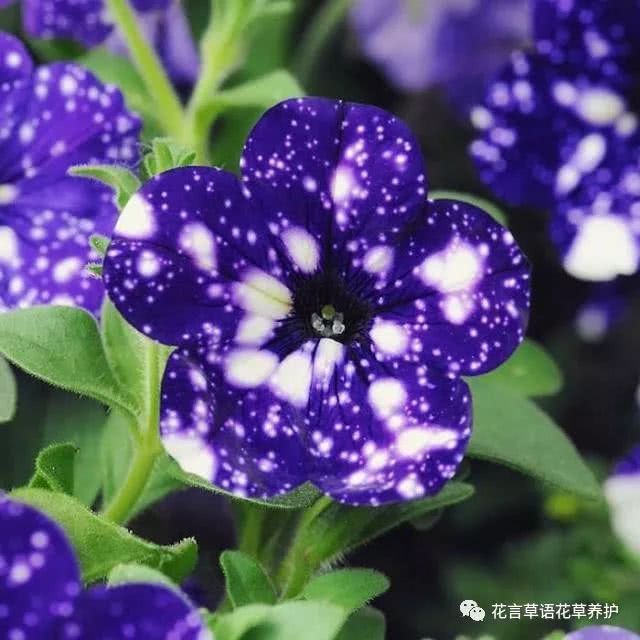
Although the petunia looks similar to the morning glory, they are two different species. The petunia is a perennial herbaceous flower that originated in South America and is now a very popular household ornamental flower all over the world, also known as the king of herbaceous flowers.
Also known as the dwarf petunia, its flowers are borne singly in the leaf axils and at the tips. The blooms are large: single-flowered forms are funnel-shaped, double-flowered forms are hemispherical, and the petal edges are highly variable. The flower colors are very rich, including white, pink, peach red, rose red, deep red, purple, blue and more, as well as bicolor types.
Growing environment
A long-day plant, it requires ample sunlight during the growing period. Its optimum growing temperature is 13°C to 18°C, and in winter the temperature should be 4-10°C; if it drops below 4°C, the plant stops growing. In summer it can tolerate high temperatures above 35°C. During the peak growing period in summer it needs plenty of water, especially in the hot summer season, when it should be watered in the morning and evening to keep the potting soil moist. However, in the plum rain season, when there is a lot of rain, conditions are very unfavorable for petunia growth: if the potting soil is too wet, the stems and leaves tend to grow leggy, and if there is a lot of rain during the flowering period, the flowers easily fade or rot. If the potting soil remains waterlogged for a long time, the roots will rot and the plant will die, so potted petunias should be grown in loose, fertile, well-drained sandy loam.
Water management
Always follow the principle of not watering until the soil is dry, and watering thoroughly when you do. The petunia likes a slightly dry soil environment and dislikes excess moisture in the medium, so ensure an adequate water supply while also allowing the roots to breathe. After the flowers open, watering should be sufficient; soil that is too dry can easily cause the flowers to wilt prematurely.
Proper fertilization
In the early growth stage of young seedlings, apply light fertilizer frequently, choosing a fertilizer with high nitrogen and potassium content and appropriately low phosphorus. When leggy growth is observed in the branches, a compound fertilizer containing calcium and magnesium can be applied, with the concentration controlled at 0.1%-0.2%; during the vigorous growing period, apply a dilute fertilizer solution once every 7 days to promote lush growth. Petunias have a relatively high demand for boron and calcium. When yellow streaks appear on the leaves, it is often caused by a deficiency of boron and calcium, and this can be remedied with boron at 40-60 mg/kg or a calcium compound fertilizer.
Light regulation
The petunia is a sun-loving plant and needs ample sunlight for both growth and flowering. Its flower buds can differentiate under both long and short daylight. Short daylight easily promotes the growth of lateral buds, making the plant more compact and the flowering more dense; under the long daylight and strong light of summer, there is less branching, the flower buds are terminal, flowering is earlier, and the flowering period is shortened. Appropriate shading helps produce larger, more vividly colored flowers and prolongs the blooming time.