Watering succulents with fish tank water: they can grow plump even without fertilizer for a year
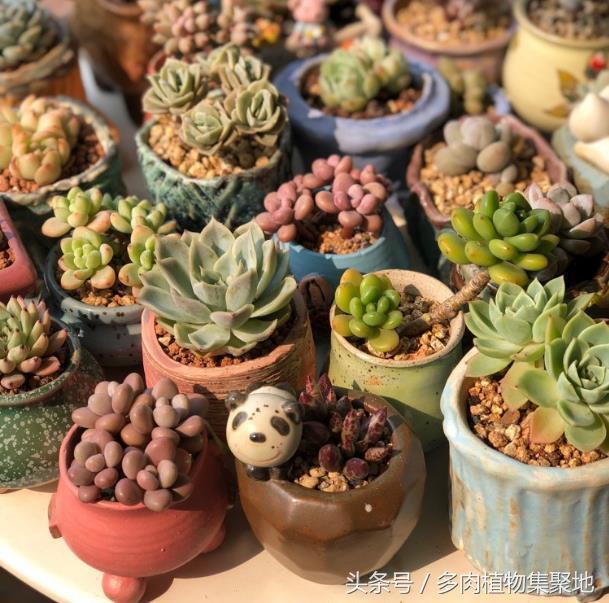
Many gardening enthusiasts believe that plenty of water promotes succulent growth, but that is not true. Overwatering only makes succulents grow taller, not plumper. Only when you control watering and let the succulent feel a shortage of water does it, over time, use its own stored moisture to grow, and the leaves naturally become thick and fleshy. However, this reduced watering must be kept in moderation; it cannot be too dry, otherwise the leaves will become shriveled. Generally, for succulents whose root systems are already well established, watering 1-2 times a month during the growing season is enough, watering thoroughly each time, in the morning or evening.
Some water in daily life contains nutrients and is a good choice for watering succulents. If you keep fish at home, throwing away the changed water directly is really a waste, because the fish tank water contains feces excreted by the fish or uneaten fish food, and these things can provide good nutrition for plants. Because the temperature of the fish tank water may differ from room temperature, it is best to let it sit for about 2 days before watering the plants.
If you want succulents to grow plump, the soil mix is still key. The roots of succulents grow in the soil, and a suitable soil mix not only provides certain nutrients for succulent growth, but the soil environment after watering is also suitable for succulent growth. The sand commonly seen in our daily lives is very suitable for mixing into succulent soil. Using sand as a granular planting medium can increase the air permeability of the soil. Many succulent growers also use pure sand to grow succulents, but sand has no nutrients.
As for watering, no matter where you are, no matter what the temperature is there, grasp one key point: if the soil is not dry, do not water, and this will absolutely prevent root rot. I am used to controlling water, that is, only watering 3-4 days after the soil dries. At this time, the succulent will absorb water frantically, filling its leaves with moisture, and then the succulent looks very beautiful. At the same time, except when the winter temperature is below 0°C, water as much as possible at night, because during the day the succulent is in a dormant state.
Coal cinders are also a fairly common planting medium in our daily lives and are very suitable for growing succulents. Fully burned coal cinders basically have no residual pathogens and contain trace elements needed for succulent growth. Mixed into the soil, they provide air permeability and drainage. However, coal cinders must be crushed and then soaked in water before use, which can effectively remove the alkalinity of the coal cinders and make them more suitable for succulent growth.
If your succulents produce relatively few offsets, then that means they lack phosphorus fertilizer. When composting fertilizer, you can add fish scales or fish intestines for fermentation. Nitrogen fertilizer can promote plant leaf growth and lush foliage. Phosphorus fertilizer used before the flowering period of plants will increase the number of flowers and extend the flowering period. Using potassium fertilizer will make the plant's root system lush and the branches (stems) thick and strong. Flower fertilizers sold at flower markets are generally compound fertilizers; for example, monopotassium phosphate is a compound fertilizer whose main components are phosphorus and potassium elements.
This is a gathering place for succulent enthusiasts, sharing succulent care tips. You are welcome to follow and exchange ideas.