What to do when a succulent turns black in one area after division? Handle it properly and your propagation success rate doubles
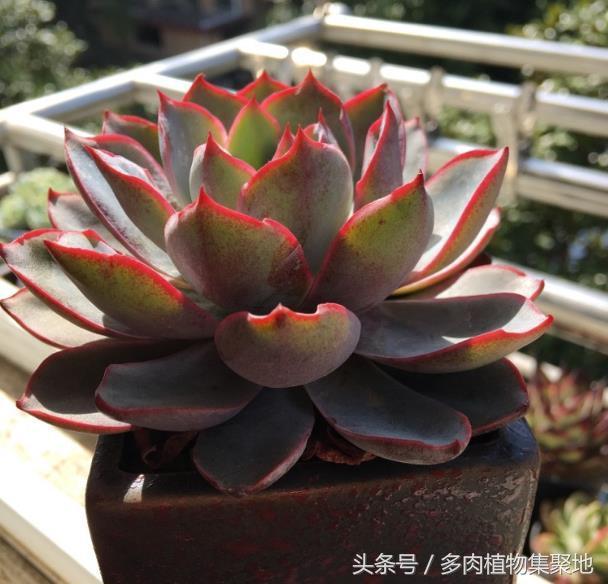
Black rot is one of the most common diseases in succulents. It is usually a fungal infection caused by overwatering or an overly humid growing environment. It takes many forms, and by the time you notice it, it is often already too late. Stay vigilant for discolored areas on the plant, as well as soft, mushy stems and leaves. Beheading is an important method for solving problems with succulent propagation, black rot, and leggy growth, but when you behead a succulent, exactly how far should you cut?
As for the right spot to behead a succulent, for a plant whose stems and leaves are growing wildly, you need to find a suitable place on the stem to start. Generally, after a period of growth, the stem becomes fibrous; the closer to the tip, the more tender the stem. A stem that is too tender does not hold water well and is more prone to bacterial growth, and a cutting taken from it does not root easily, so you need to find a spot where the stem is slightly firm and make your cut there.
If, after beheading, the cut surface of the succulent looks red overall, that means the cells inside the succulent are dividing and multiplying, which also shows that the succulent is still very vigorous. But if the succulent shows signs of infection, then the wound after beheading should be left to dry for a few more days, and you can also disinfect the succulent. If the succulent's stem looks dehydrated and withered, then that part is also unhealthy and must not be kept; keep cutting the succulent further down. Not only when beheading a succulent, if the stem is shriveling, but also in normal times, if you can tell from the succulent's appearance that the stem is shriveling, you need to be vigilant and deal with it promptly.
After beheading a succulent, if you can see a patch of black on the stem, first we need to determine whether it is caused by succulent black rot or by the stem becoming woody. If it is succulent black rot, it spreads infection easily and will also be a bit soft, so it is best to keep cleaning up the succulent. Although the woody part of the succulent is also dead tissue, it has no negative effect on the succulent; instead, it can protect the fresh tissue of the succulent, so it can be kept.
Before carrying out beheading propagation of succulents, you should care for the plant carefully so that the chosen mother plant grows as well as possible, which makes the operation easier. When beheading, choose a stem position that the beheading propagation tool can enter smoothly. Use a sharp tool with one hand, use the tool or your other hand to steady the mother plant so it is stable, then use the hand holding the tool to cut off the shoot intended for transplanting quickly and cleanly. All the movements should be continuous, in one smooth motion.
Propagating from side shoots by stem cuttings is also commonly called beheading propagation. Every year in spring and autumn, succulents are in their season of vigorous life, and this period is suitable for beheading propagation. After beheading, the impact on the thick mother plant is minimal, and the mother plant can quickly sprout new side shoots from its sides. If during the operation the mother plant or the shoot intended for transplanting suffers crush damage and its protective layer is destroyed, then for the smooth growth of both the mother plant and the transplant shoot, the crushed part must be cut off again. Beforehand, you should prepare a transparent container, a new container, and soil; the container size best matches the transplant shoot.
This is a gathering place for succulent lovers, sharing succulent care tips. You are welcome to follow and join the conversation.