What do succulents' fasciation, variegation, and black rot mean? Only by understanding the terms can you grow them well
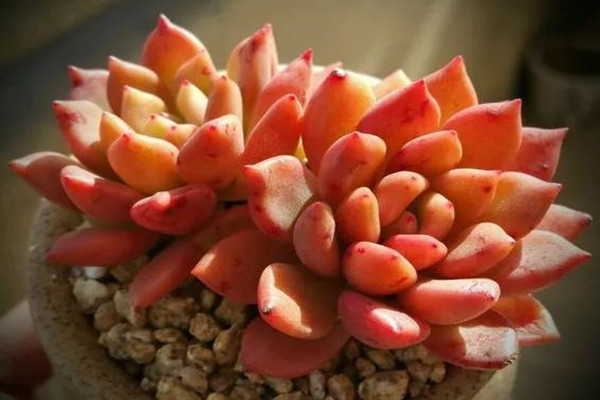
The great succulent care methods
Newbies who have just entered the succulent rabbit hole mostly only know to throw their succulents on the balcony to sunbathe. But they don't know that succulents also have the following various growing methods.
Open-air growing
Open-air growing means growing them outdoors, placing succulents outside for care. Open-air grown succulents most easily reach their best condition.
Huahua's tips:
In spring and autumn, the sunlight is mild and not intense, making it the most suitable time for open-air growing. However, in summer when the light is fierce, you must pay attention to providing shade measures to prevent succulents from getting sunburned.
Open-air growing recommendations:
Most succulents are suitable for open-air growing, but Haworthia genus succulents fear strong light and easily develop light spots, such as Haworthia cooperi and Haworthia truncata. These types of succulents are best not grown in the open air.
Enclosed growing
Enclosed growing refers to covering succulents with a transparent container for care. The gases produced by the succulents' own photosynthesis will turn the container into a "mini greenhouse."
Huahua's tips:
Sterility is the key to enclosed growing. Before enclosed growing, the potting soil and container must be disinfected. Succulents that have just been potted, have wounds, or are in dormancy are not suitable for enclosed growing.
Enclosed growing recommendations:
Cactus-type and Haworthia genus succulents are both suitable for enclosed growing, such as Haworthia cooperi, Haworthia truncata, and Haworthia retusa.
Diffused light
Diffused light means not receiving direct sunlight, but having bright light. Bright windowsills, living rooms, and similar places all count as diffused light environments.
Huahua's tips:
Diffused light environments are suitable for succulents that have just been potted and are in the acclimation period, as well as succulents in poor condition. Diffused light environments help succulents return to normal condition.
Diffused light care reminder:
Generally, unless in special circumstances, diffused light care is not recommended for succulents. Diffused light environments easily cause succulents to become leggy.
Succulents have varied forms
Many flower lovers fell into the rabbit hole after seeing the various beautiful forms of succulents grown by masters. These various forms also have their own exclusive names!
Fasciation
Fasciation refers to a growth state in which a succulent, stimulated by unknown external factors, develops abnormal meristem at the top, forming multiple growth points, and finally these growth points connect horizontally into a line, ultimately forming a fan shape.
Huahua's tips:
Fasciation in succulents occurs accidentally, and sometimes they can also return to normal from fasciation. To maintain fasciation, you need to remove the normal parts to reduce the growth advantage of the normal areas.
Fasciation recommendations:
Most succulents can show fasciation through leaf propagation. Among them, Echeveria runyonii 'Topsy Turvy', Echeveria 'Jinsihuang Heiwangzi', and Echeveria elegans are especially prone to fasciation.
Variegation
Succulent variegation refers to changes in leaf color, such as the appearance of white, yellow, red, and other colors not originally part of the leaf.
Huahua's tips:
There is seasonal variegation, where the variegation disappears after a period of time. Of course, there is also stable variegation. It all depends on luck~
Variegated succulent reminder:
Variegation in succulents is not always a good thing. After variegation, succulents have higher requirements for the growing environment. Some succulents will even gradually become fully variegated and head toward death.
Clustering
Clustering refers to a single succulent growing multiple heads, and once grown, it is called clustering.
Huahua's tips:
If you want to grow clustered succulents, you can use the "beheading method." During the succulent's growing season, behead the succulent to stimulate the growth points to sprout side shoots.
Clustering recommendations:
Some common succulents, such as Graptoveria 'Titubans', Sedum rubrotinctum, and Echeveria derenbergii, all cluster and fill their pots very easily.
Old stumps
Old stumps refer to succulents that have grown for many years and whose lower stems have already become woody.
Huahua's tips:
Developing old stumps takes a relatively long time. During care, water as little as possible, preferring dry over wet.
Succulents often die like this
Caring for succulents is not just as simple as watering and sunbathing. If you are not careful, your succulent will die!
Black rot
Black rot refers to stems and leaves turning black and rotting due to high temperature and stuffiness or bacterial growth.
Huahua's tips:
To prevent succulent black rot, be sure to place succulents in well-ventilated places, such as balconies and windowsides. If a succulent has black rot, use scissors to cut off all infected parts.
Turning to water
High temperature and stuffiness or a bacteria-heavy environment can also cause succulents to turn to water, usually showing as transparent, softened leaves.
Huahua's tips:
To prevent turning to water, place succulents in a ventilated area. For succulents that have already turned to water, remove the leaves that have turned to water. If the roots have rotted, cut away all the rotted root parts cleanly.
Have you mastered today's little succulent science knowledge?
Hope you become a succulent master soon
And grow super beautiful succulents!