A miraculous plant that can treat whooping cough, stomach pain, dermatitis, irregular menstruation and other conditions
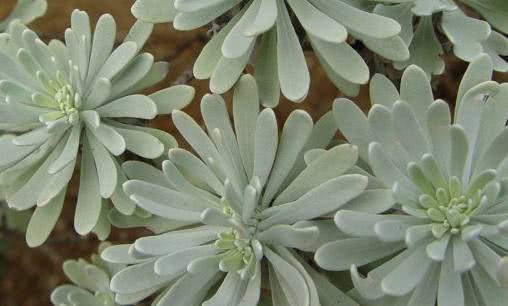
Sea hibiscus, a plant of the Plumbaginaceae family. 30-100 cm tall. Stem cylindrical. Much branched; lower branches nearly opposite, covered with a powdery bloom. Distributed in Fujian, China. Abundantly found on Diaoyu Island. There is a saying among the people: "Obtaining a bundle of sea hibiscus is better than obtaining a cart full of gold and silver." Inflorescence corymbose, the inflorescence axis emerging from the leaf axils, 7-16 cm tall, forked twice from the upper part; spike usually composed of 5-11 spikelets; spikelets containing 2-4 flowers; outer bract about 2-2.5 mm long, broadly ovate, apex acute, first inner bract about 5 mm long, broadly elliptic, apex rounded; calyx about 5 mm long, funnel-shaped, the tube covered with long hairs along the veins, calyx limb white, usually folded and slightly spreading, lobes acute-triangular, covered with hairs along the veins in the lower part, corolla pale purplish red.
Low semi-shrub; old branches dark brown, densely covered with the persistent bases of leaf stalks; the whole plant (except the calyx) hairless. Leaves clustered on the upper part of the branches (current-year branches), fleshy, 2-4 cm long, about 4-7 mm wide, oblanceolate, apex rounded, tapering below into a stalk, base expanded and half-clasping the stem, midrib indistinct. Inflorescence corymbose, the inflorescence axis emerging from the leaf axils, 7-16 cm tall, forked twice from the upper part; spike usually composed of 5-11 spikelets; spikelets containing 2-4 flowers; outer bract about 2-2.5 mm long, broadly ovate, apex acute, first inner bract about 5 mm long, broadly elliptic, apex rounded; calyx about 5 mm long, funnel-shaped, the tube covered with long hairs along the veins, calyx limb white, usually folded and slightly spreading, lobes acute-triangular, covered with hairs along the veins in the lower part, corolla pale purplish red. Flowering period August-September, fruiting period September-October.
Medicinal source: the Plumbaginaceae plant sea hibiscus, with the root and whole plant used as medicine. Effects: a diuretic and anti-edema medicine, detoxifying, strengthening the lungs, healing knife wounds, and can also treat stomach pain, colds, whooping cough, dermatitis, poor development, traumatic injuries, irregular menstruation, rheumatic pain, etc. According to literature reports, it can treat cancer. Nature and flavor: bland; cool in nature. Usage and dosage: oral administration: decocted in water, 9-15 g. Resource distribution: distributed on the coastal islands of Taiwan, China (Diaoyu Island and other islets) and Indonesia. Ecological environment: grows on sandy beaches. Harvesting and storage: harvested in spring and summer, used fresh or dried in the sun. Medicinal source: the whole plant of the Chenopodiaceae plant sea-blite. Effect classification: a diuretic and anti-edema medicine, a good medicine for preventing and treating rheumatism and high blood pressure. Nature and flavor: bland; cool in nature. Effects: diuretic and anti-edema. Indications: edema. Usage and dosage: oral administration: decocted in water, 9-15 g.
Have you watched the TV drama "Sea Hibiscus"? The Ming dynasty scholar Wang Zhongguang, by imperial decree, went to a savage island to gather medicinal herbs and survey and understand the local conditions. During the survey, Wang Zhongguang was unfortunately bitten by a venomous snake on the island, and happened to be saved by Anuoyi, the daughter of Chahar, the sage physician of Shuri Castle in the Hibiscus Kingdom. Wang Zhongguang spread culture in Hibiscus, helped the Hibiscus people master farming and shipbuilding techniques, and promoted the cultural development and trade prosperity of Hibiscus. Before long, Wang Zhongguang and Anuoyi fell in love. The Japanese pirates, seeing that Hibiscus was about to be unified by the Great Ming, repeatedly went to Hibiscus to harass it. Within a few days, internal strife broke out among the Three Mountains of Hibiscus. Wang Zhongguang and Anuoyi, fearing no danger, passed the intelligence to Zhu Yuanzhang. In the fifth year of the Hongwu era of the Ming dynasty, Zhu Yuanzhang sent the envoy Yang Zai with an imperial edict on a mission to Hibiscus, and after naming it Sea Hibiscus Island, on Yang Zai's suggestion, sent imperial guards to Hibiscus to assist, unifying the Three Mountains and enabling Hibiscus to revive in harmony; the local people all praised this. Chadu, the King of Zhongshan of the Hibiscus Kingdom, received the edict and immediately sent his younger brother Taiqi, together with Yang Zai, to come to China, presenting a memorial and acknowledging vassalage.