How to care for rootless succulents: once they root, a simple transplant will make them burst into a full pot
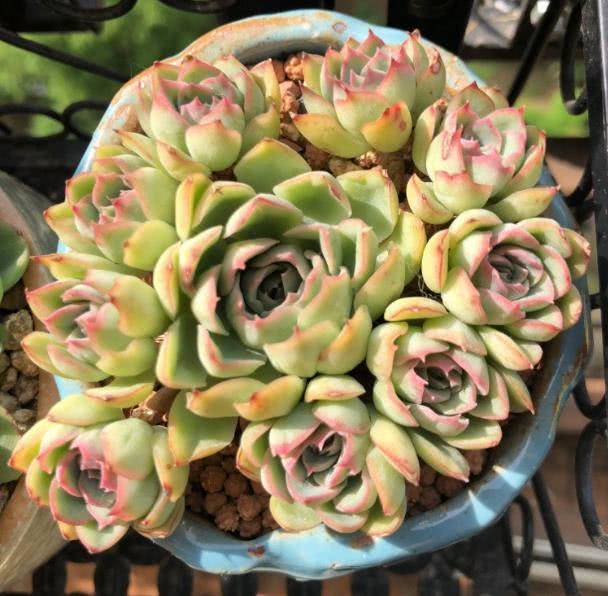
For rootless succulents like beheaded cuttings, we can use water propagation to encourage rooting first, let the succulent grow roots, and then replant it in a pot. For water propagation of succulents, the wound on the succulent must be dried and healed properly, and the water level must also be kept at a certain distance from the bottom of the succulent.
How do you carry out water propagation for succulents? You can take a small mineral water bottle, fill it with water, and then place the succulent at the bottle opening, with the succulent's root area about 1CM above the water surface. In any case, it needs to be close to the water but must never touch the water. After 3 days, roots will basically appear. The downside of the water propagation method is that the roots grown this way are not as strong as roots grown on the soil surface. I think this possibility is very likely, but having roots is always better than having none.
Once the succulent has rooted, it should be transplanted into soil in time, because roots grown by water propagation are still not hardy enough, and the water propagation method provides no nutrients. The succulent's roots cannot grip the soil, so it cannot grow sturdy, and it also cannot absorb nutrients to support the succulent's growth. When potting up the succulent, do not fill the flower pot completely. Instead, dig a hole and plant the succulent in it. This suits rootless succulents. If the succulent has roots, first put a little soil in the flower pot, pile it into a cone shape, and let the succulent sit on top of it so the roots do not get squeezed together, then slowly fill soil around it.
During the period of adapting to the pot, succulents are suitable for a place with mild sunlight and good ventilation, not a dark place. With no sunlight at all, the succulent is very likely to become leggy. Of course, harsh sun exposure will also cause the succulent's own moisture to evaporate too quickly, which is not good for adapting to the pot. A spot with partial sun and no harsh exposure is better. As for watering, once a week in spring and autumn is about right, and in summer and winter the interval should be longer. With good ventilation, you can water thoroughly.
There is a simple way to judge whether a succulent has adapted to its pot. When the succulent's life activities are at a standstill, new leaves and old leaves are treated equally. That is, they will soften together. But after life activities recover, new leaves enjoy a higher priority than old leaves. When you find that during the pot-adapting period the succulent's new leaves begin to become plump and firm, while the old leaves begin to be consumed, it means the succulent has adapted to the pot. But at this time the succulent's new roots are not developed enough, so you can water along the edge of the pot and avoid disturbing the growth of the new roots. Soon, the succulent's old leaves will also become plump, and the succulent will truly have adapted to the pot.
Some succulents can produce multiple heads and grow in clusters, but if a succulent simply holds back and does not grow side shoots, and after several years is still a single large head, you can behead the succulent, and it will then be relatively easy for it to burst with side shoots. Especially for a succulent in its growing season, it may even burst with side shoots like crazy. However, everyone can also grow some succulents that naturally love clustering, such as the succulent Echeveria 'Mebina' (Nüchu), which loves clustering and easily bursts with side shoots.
This is a gathering place for succulent lovers, sharing succulent care tips. You are welcome to follow and exchange ideas.