Beyond pothos, these foliage plants are equally evergreen all year round
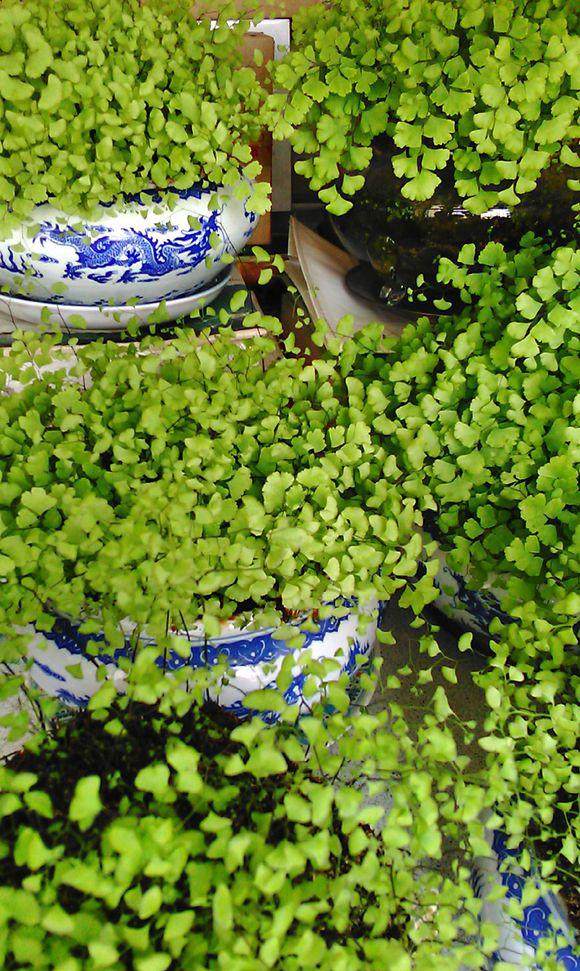
Every time I visit a gardening friend's home, I always see pots of pothos placed on the balcony or in the living room. As an easy-to-grow and easy-to-keep potted plant, pothos really is loved by everyone. I believe what everyone values about it is its lush green foliage all year round, plus its ability to absorb formaldehyde and purify the air. In fact, besides growing pothos, there are many other foliage plants you can grow! For example, all of these~
1. Maidenhair fern
Care for maidenhair fern:
Maidenhair fern likes a humid environment. During the peak growing season, water it thoroughly. Besides keeping the potting soil moist, also pay attention to maintaining high air humidity. When the air is dry, sprinkle water around the plant. Especially in summer, water 1-2 times a day. If it lacks water, the leaves will shrivel.
Brown scorched edges on maidenhair fern leaves are the most common problem encountered in cultivation.
Remedial measures:
① It must immediately be placed in a semi-shaded spot. ② Cut off the scorched leaves and promptly spray water on the leaf surface and the surrounding ground. ③ Care for it attentively and try to avoid exposing it to strong light again.
2. Spider plant
Care for spider plant:
You can use fertile sandy loam, humus soil, peat soil, or fine sandy soil with a small amount of base fertilizer as potting soil.
Light: In spring and autumn, avoid direct exposure to strong sunlight. In summer, when sunlight is especially intense, it can only receive some oblique light in the morning and evening, and 50%-70% of the sunlight needs to be shaded during the day, otherwise the leaf tips will dry up.
Water: Spider plant likes a humid environment, and the potting soil should be kept moist regularly. In summer, water sufficiently. Around noon and in the evening, also spray water on the branches and leaves to promptly wash off dust on the leaves and prevent the leaves from drying up.
3. Bottle palm
Care for bottle palm:
Bottle palm likes loose sandy soil and humus soil, and is tolerant of drought and poor soil. For potting soil, choose one with good drainage. You can mix 3 parts fertile garden soil with 1 part cinder, then add a small amount of soybean cake or chicken manure as base fertilizer.
Fertilizing: Spring, summer and autumn are the peak growing seasons for bottle palm. Apply liquid fertilizer or compound fertilizer once every 2-3 weeks to promote swelling of the base. When fertilizing, be sure to increase phosphorus and potassium fertilizer, with a nitrogen-phosphorus-potassium ratio of 5:10:5. Stop fertilizing in winter.
Watering: Because its stem can store water for use when water is scarce, bottle palm is especially drought-tolerant and can still grow normally without watering for half a year. When watering, aim for moist potting soil and follow the principle of preferring dry over wet. Never let water accumulate in the pot, otherwise the fleshy roots and stem base will easily rot.
4. Asparagus fern
Care for asparagus fern:
For the potting soil for cultivating asparagus fern, use fertile sandy loam. It requires warmth and humidity, rich humus, and good drainage. Generally, you can use a mix ratio of 4 parts garden soil, 2 parts leaf mold, 2 parts compost soil and 1 part sand, and you must change the soil and add fertilizer regularly.
Asparagus fern must not be exposed to the scorching sun. In hot seasons, it should be placed in a cool, ventilated spot. At the same time, during its flowering period, asparagus fern is afraid of both wind and rain, so pay attention to good ventilation. On nice days, it can appropriately be placed outdoors to receive sunlight.
Asparagus fern should be placed in a clean, well-ventilated environment, away from decorative materials such as marble that release mercury vapor.
Asparagus fern plants 3-5 years old grow relatively densely and can be propagated by division. Choose spring when repotting to carry out division. Use a sharp knife to divide the clustered stems and roots into 2-3 clumps, making sure each clump contains 3-5 buds, then plant them separately in pots.
5. Cast iron plant
Care for cast iron plant:
Cast iron plant is not demanding about soil and tolerates poor soil, but loose, fertile, slightly acidic sandy loam is better.
During the vigorous growing period in spring and summer, apply liquid fertilizer 1-2 times a month to keep the leaves fresh and bright. It can be grown year-round in a bright indoor space, but whether indoors or outdoors, it must not be placed in direct sunlight; even short exposure to the sun can cause leaf scorch and reduce its ornamental value.
During the growing season, water thoroughly, keep the potting soil consistently moist, and frequently spray water on the leaf surface to increase humidity. This helps buds sprout and new leaves grow.
6. Rubber tree
Care for rubber tree:
Rubber tree leaves are thick and fleshy, and its water requirements are not very high. In environments with high summer temperatures and dry autumn conditions, pay attention to watering and just keep the medium moist. You can also spray water on the leaf surface. The medium can be made by mixing peat soil, leaf mold, river sand, etc. Slightly acidic is best.
Light: Rubber tree cannot tolerate exposure to strong sunlight. When light is too intense, it will scorch the leaves, causing yellowing and scorched leaves. It also should not be too shady, otherwise it will cause a large number of leaves to drop and make the beautiful markings on variegated varieties fade. From May to September, shade it or place the plant in a spot with plenty of scattered light. At other times, give it ample sunlight.
Rubber tree cuttings:
Take rubber tree cuttings in late spring and early summer. For cuttings, mostly choose 1-year-old semi-lignified middle branches, with the length standardized by keeping 3 buds. Cut off one leaf below, fold the upper two leaves together, and tie them with thin plastic string. Then insert them into a cutting bed with plain sandy soil or vermiculite as the medium. After inserting, keep the cutting bed humid; roots will form in about 2-3 weeks. After potting, place in a slightly shaded spot, and gradually increase light once new buds begin to sprout.
7. Peacock plant
Care for peacock plant:
Peacock plant likes well-drained, fertile, loose, slightly acidic leaf mold or potting mix. The medium can use perlite:vermiculite at 1:1 or a mixed medium of perlite:peat:cinder at 1:1:1:1. When potting, spread a layer of ceramsite at the bottom of the pot as a drainage layer, then place the seedling upright, and add the prepared medium until the pot is eight-tenths full.
Avoid exposure to sunlight. In summer, it should be grown under a shade canopy. When the temperature is above 30°C, the leaf edges scorch, new buds sprout less, and the leaves turn yellow, so water frequently to retain moisture and lower the temperature.
Peacock plant is a shade plant with strong shade tolerance and fairly strong adaptability. It is mostly used for indoor potted ornamental display and is one of the most famous indoor foliage plants in the world.