Bonsai technique: Cleverly using the approach grafting method to add roots to an old trident maple stump
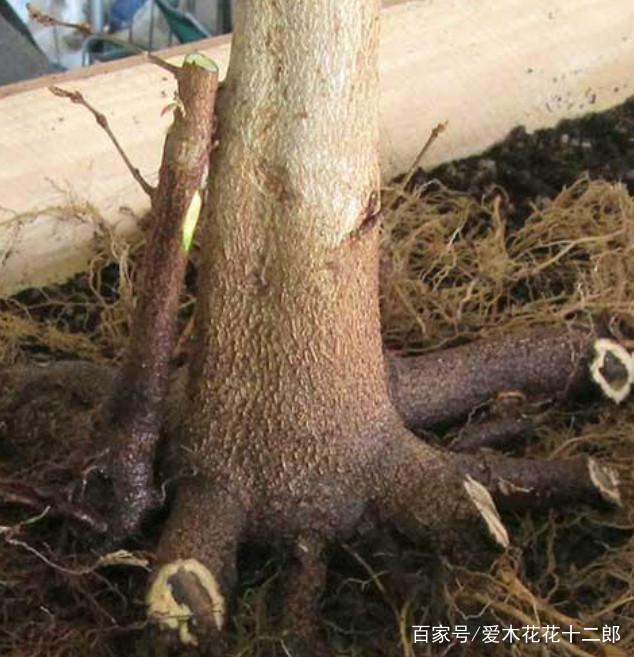
When doing bonsai, sometimes you run into this awkward situation: a stump you have cultivated for several years has a flawed root flare, with roots missing in certain spots, and trying to induce it to grow them on its own is nearly impossible. Is there any method to quickly add roots? Yes, use the approach grafting method. That is, press a small seedling against the position where roots are missing; after a period of growth the two merge into one whole, then all the branches of the seedling are removed, but the seedling's roots remain forever connected to the old stump. This method is very simple, but it also requires a certain amount of time. Previous articles have said that in bonsai, the unit of time is the year, as short as two or three years, as long as twenty or thirty years. These methods and techniques can only relatively shorten the time to reach the finished form, but cannot be said to achieve it in a short period.
This is an example of a trident maple. From the picture, the root system of this trident maple is generally fine, but it has some flaws, with gaps. So the approach grafting method was used to add some roots to it.
The specific operation: first match up the height and position, then remove the outer bark where the seedling and the old stump make contact, exposing the cambium, and press the cambium of the two together.
Then fix them with cable ties or aluminum wire, or driving in small nails also works; it must fit tightly. Using small nails may give a slightly better effect, and driving in a few more does no harm; cable ties will leave pressure marks. In an earlier article of mine, I posted some photos of trees in nature swallowing iron railings as they grow. The nails will eventually be swallowed up, so there is no need to worry; after some years they may even have been digested by the tree. Use plant wound sealant to seal the joined area, to prevent infection and to keep the cambium from dehydrating and drying out, which would cause failure.
Then pot it up and let it grow freely.
After a period of time, the two have merged together.
After a further period of time, if you were not told, you might not even be able to tell that grafting was done. However, from this picture the pressure marks are fairly obvious.