This plant looks like a masterpiece carefully carved by God, with a peculiar shape
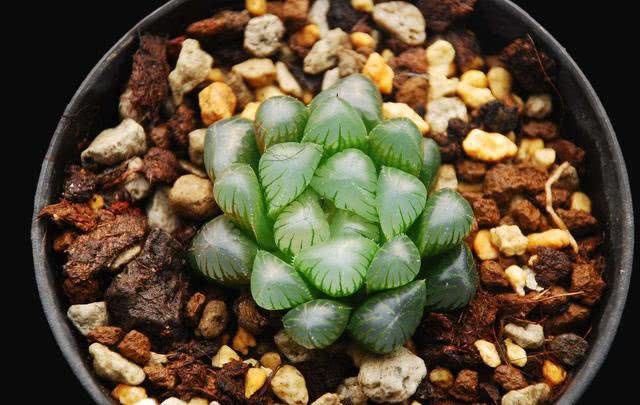
Today let's talk about another very famous succulent plant - Ice Lantern Haworthia cooperi. And it is also the finest among Haworthia cooperi, known as a living sculpture. Ice Lantern Haworthia cooperi is a succulent plant of the genus Haworthia in the Liliaceae family, named for its fleshy leaves that are crystal clear and bright, as clear and transparent as ice lanterns.
Ice Lantern Haworthia cooperi has the effect of purifying air and resisting radiation (in the first episode we talked about succulents not having the ability to resist radiation, it is just a psychological effect). Ice Lantern Haworthia cooperi can be grown in courtyards or balconies, studies, living rooms, offices and other places as decoration. It can also be planted in small pots and placed on windowsills, desks, office desks, balconies and other places. But Ice Lantern Haworthia cooperi is relatively difficult to grow, so it needs careful care.
Plants all have their own growth patterns, and the main growing season of Ice Lantern Haworthia cooperi is in spring and autumn. It is suitable for a cool, semi-shaded environment, because Ice Lantern Haworthia cooperi is averse to high temperatures, humidity and scorching sun exposure, and it is also afraid of shade and cold. But it still has one advantage: Ice Lantern Haworthia cooperi is drought-tolerant, though it is also afraid of waterlogged soil.
We know that Ice Lantern Haworthia cooperi grows well in spring and autumn. So its temperature is best kept at 15°C~28°C. Because once it exceeds 35°C, Ice Lantern Haworthia cooperi will go dormant, and the leaves will show signs of shrinking and dullness, but after the temperature drops and water is replenished, it will immediately recover. And in winter, if the temperature is kept at around 10°C, it can grow as usual.