Senna is a balcony potted plant that is both ornamental and medicinal
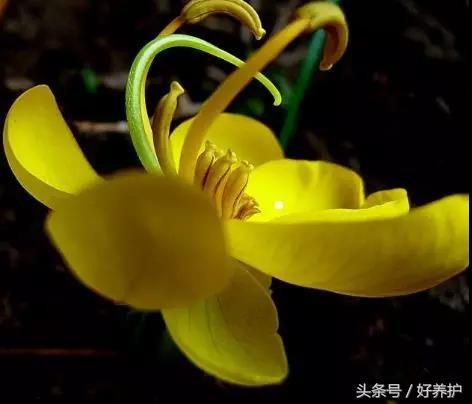
This is the horseshoe senna, named for its effect on brightening the eyes. There are also herb senna and abalone shell senna, all with the same function. - Compendium of Materia Medica
Senna is an annual subshrub-like herb, and its seeds are the commonly used traditional Chinese medicine Cassia Seed, which has the functions of clearing the liver and brightening the eyes, and promoting bowel movements. It mainly treats hypertension, headache, dizziness, acute conjunctivitis, corneal ulcers, glaucoma, carbuncles, sores, and other conditions.
Plant Introduction
Senna, also known as horseshoe senna and herb senna, originated in tropical America and the provinces and regions south of the Yangtze River in China, and mostly grows on mountain slopes, open fields, and sandy riverbanks. Senna has extremely strong vitality in plant communities and is not strict about soil requirements. It can be cultivated on sunny gentle slopes, beside ditches, and along roadsides. It prefers a warm and humid climate, and the more sufficient the sunlight, the more favorable it is for its growth.
Related Stories
Once upon a time there was an old scholar who developed eye disease before he was even sixty. He walked with a cane, and people all called him Blind Scholar. One day, a medicine merchant from the south passed by his home, saw a few wild grasses in front of the door, and asked whether the seedlings were for sale. The old scholar asked in return, "How much will you give?" The merchant said, "I will give as much as you ask." The old scholar thought to himself: these few grasses are quite valuable, so he said, "I won't sell them." When the merchant saw that he would not sell, he left.
Two days later, the southern medicine merchant came again, still wanting to buy those few grasses. By then, the grasses in front of the blind scholar's door had grown to more than three chi tall, and the stems were already covered with golden yellow flowers. When the old scholar saw the merchant come to buy again, he felt the grass must be valuable, and he still could not bear to sell it.
By autumn, these few wild grasses had produced diamond-shaped, grayish-green, glossy seeds. When the old scholar smelled them, the seeds were quite fragrant, and he felt they must be good medicine, so he took a small handful and steeped them in water to drink every day. As time passed, his eye disease improved, and he no longer needed a cane to walk.
Another month passed, and the medicine merchant came a third time to buy the wild grass. Seeing that the wild grass was gone, he asked the old scholar, "Did you sell the wild grass?" The old scholar then told him everything about how the wild grass seeds could cure eye disease. After hearing this, the merchant said, "These seeds are good medicine. Otherwise, why would I have come three times to buy them? They are called 'Cassia Seed,' also called 'herb senna,' and can treat various eye diseases. Taken over a long period, they can brighten the eyes."
Later, because the old scholar often drank tea brewed from Cassia Seeds, he still had clear eyes and a healthy body well into his eighties. He once recited a poem: "The foolish old man at eighty still does not go blind, counting fly-head-sized characters by day and lighting stars by night. It is not that he was born with good eyesight, but only that he has long drunk senna."
Planting Methods
Choose Cassia Seeds that have not been roasted, are plump, and are free of insect damage, and soak them in warm water at about 50° for 24 hours;
Fill the flower pot with soil, apply fertilizer well, and then dig several small holes at a certain spacing to a depth of about 5 cm;
Take out the soaked Cassia Seeds, wipe off the water, scatter them into the small holes, press them slightly flat, and water them;
Remember to water promptly, and keep the soil moist during the growth period of senna.
The Main Value of Cassia Seeds
1. Brightening the eyes
Cassia Seeds can also be used in ophthalmic treatment, as its name itself indicates. "Jue" means to open and unblock, and "ming" means to break through darkness and see light again. Crush Cassia Seeds and take them with boiled water on an empty stomach every morning, and "after a hundred days one can see light at night."
2. Promoting bowel movements
In hot seasons, the body sweats more and loses water faster, making dry stools and constipation more likely. At this time, drinking water steeped with Cassia Seeds can have a very good effect in brightening the eyes, promoting bowel movements, and clearing the intestines.
3. Purging liver fire and calming liver yang
Cassia Seeds have a relatively strong effect in purging liver fire and can treat headache and dizziness caused by liver fire or liver yang.
4. Lowering blood pressure
Cassia Seeds can also be used to treat hypertension. Take 20-30 grams of Cassia Seeds (stir-fried until slightly yellow), 10-15 grams of honeysuckle, and 15 grams of Hangzhou chrysanthemum, and brew them with boiled water as tea. One dose per day, and it can be drunk over the long term.
5. Preventing heat-related colds
If there is a heat cold, appropriate amounts of mulberry leaves, bamboo leaves, and mint can be crushed and boiled in a pot with chrysanthemum or steeped in boiling water to drink. This can have a certain preventive and therapeutic effect on symptoms such as sore throat from heat and wind-heat cold.
It should be noted that Cassia Seeds are cold and cooling in nature, and are not suitable for patients with deficiency-cold of the spleen and stomach, diarrhea due to spleen deficiency, or low blood pressure.