Jasmine is easy to grow. Remember these few points and it will bloom abundantly all year round.
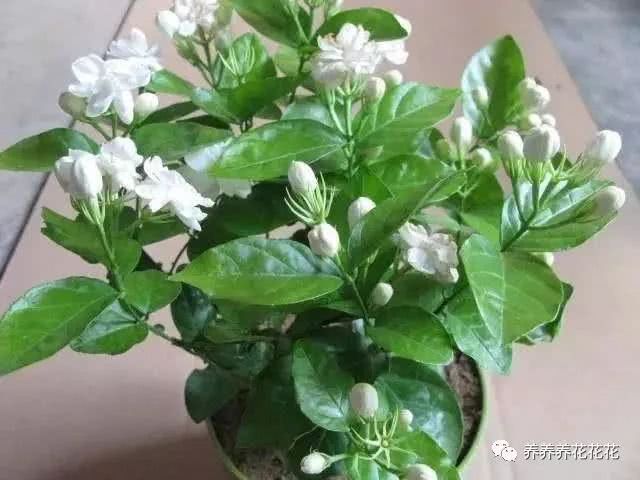
The jasmine you just bought has yellow leaves - what caused it? How should you deal with it? Remember these two reasons, and growing jasmine well is really simple.
One is that any plant has this characteristic during growth. During the growth process, the leaves at the bottom age and fall off - this is all normal. It is just more serious with jasmine. Because the bottom stems of jasmine age very easily. Once they age, their leaves will fall off, so we need to prune it regularly, control the length of its branches, and let it drop as few leaves as possible, so that the whole shape looks good. Prune and cut back frequently - once it has more side buds, it will bloom more. Only then will it be lush with branches and leaves.
There is another situation with yellow leaves that you must pay attention to. Since jasmine is a flower from the south. It likes acidic soil, so when we repot it we must add a certain amount of pine needle soil. Pine needle soil is on the acidic side, relatively suitable for its growth, and not likely to cause yellow leaves due to iron deficiency. The main sign of iron-deficiency yellowing is that the leaf veins turn yellow while other parts stay green. The new leaves at the top buds all generally turn yellow. If you find this situation, you must promptly supplement it with ferrous sulfate. Even if it has not shown iron-deficiency yellow leaves. Regularly watering it with a ferrous sulfate solution once a month will help it grow and prevent yellow leaves. You must remember this point.
When growing jasmine, you must top-dress fertilizer in time. Otherwise there will be yellow leaves from fertilizer deficiency or no growth. Because jasmine is a plant that blooms all year round. Blooming requires a large amount of nutrients. You must replenish nutrients in time. Since it keeps blooming, try to choose a fertilizer based mainly on phosphorus and potassium. It can both promote sturdy plants and promote blooming, without lacking nutrients.
Growing jasmine well is actually very simple. After it finishes blooming, promptly cut the branches short, keeping about two nodes. After blooming, top-dress fertilizer in time, ensuring two to three fertilizer applications a month, and water with ferrous sulfate once a month. For the potting soil, try to choose loose, breathable soil. When the soil surface is dry, water it thoroughly directly. As long as the temperature reaches the right level throughout the year, you must give it plenty of light, so it can bloom more and bloom well. Remember these few points, and growing jasmine is too easy - it blooms all year round, and every time it blooms abundantly for you.
If you feel you understood what Xiao Qi said and it was helpful to you. Follow Xiao Qi, and please give Xiao Qi a like and share and comment on this question. Xiao Qi thanks everyone!
If you like growing flowers, followWeChat public account: Yang Yang Yang Hua Hua Hua (hcqzj521)More flower-growing knowledge is waiting for you.