Orchid old pseudobulbs: the correct and fast way to grow new roots in ten minutes, teaching many orchid growers to avoid pitfalls
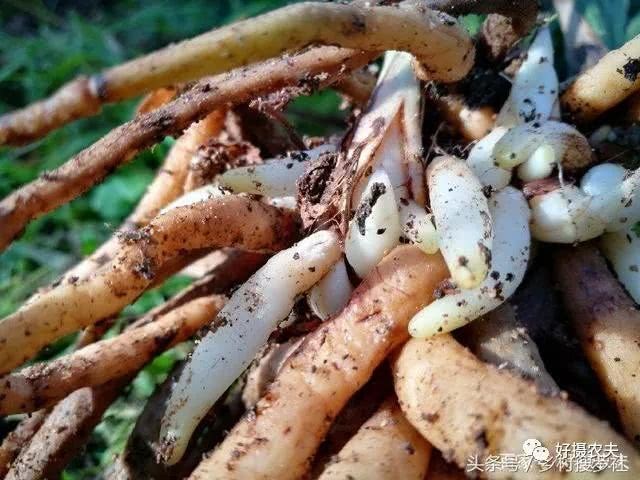
Looking at the roots of this orchid, you would never guess what it looked like more than three months ago. The first thing many orchid growers ask is: how do you grow orchid roots like this? Actually, they should ask: why are these orchid roots so white?
Three months ago, this Cymbidium goeringii was actually close to death. Haoshe Farmer also held a let's-give-it-a-try attitude, and took the opportunity to do an experiment on wrapping old pseudobulbs, so as to share it with fellow orchid growers. So I used a very special method to nurse it back to health.
I did not use a potting mix I had made myself; instead, I used only pure moss. That's right, pure moss, with no potting mix added at all, and even the soil was just what came attached to the moss. After pruning the orchid roots, I wrapped them well in moss, then placed them in this pot and labeled it with the words "pure moss."
When I opened the pot today, I was stunned: so many new roots, white and tender new roots, and plenty of shoots and buds that were also very plump and strong. Because orchid roots are aerial roots, they can grow without soil; as long as the temperature and humidity are suitable, they can produce roots.
Then, some orchid growers will surely ask, without potting mix, where do the nutrients come from? We will get to that below. Now let's look at the color of this orchid's roots. Is it different from what you usually see? Because it has never come into contact with soil, its roots are very white.
There is no fixed method for growing orchids, and what Haoshe Farmer teaches you may not necessarily suit you. The key is still to find, in my articles, the methods that suit you, and then integrate them into your own approach. The key point of wrapping roots in moss is that the moss used must not be moldy or rotten; use fresh moss. Because moss absorbs water very easily, I usually water once every twenty days and place it in a spot with half shade and half sun. After that, there is nothing to do but wait.
Now to answer the previous question: what supplies the nutrients for such thick, strong roots and shoots? This is a Cymbidium goeringii, and Cymbidium goeringii has pseudobulbs. Its pseudobulbs store nutrients. When the roots are unable to absorb nutrients from the potting mix, the pseudobulbs are its supply station. Of course, at this point it can be transplanted into a normal potting mix, so that the nutrients are more complete, which also reduces the burden on the pseudobulbs and prepares them for bud formation in the second half of the year.
So, did you get it, folks? You are welcome to leave comments for discussion.