Yangzhou-style bonsai: dignified and elegant. The history of Yangzhou-style bonsai.
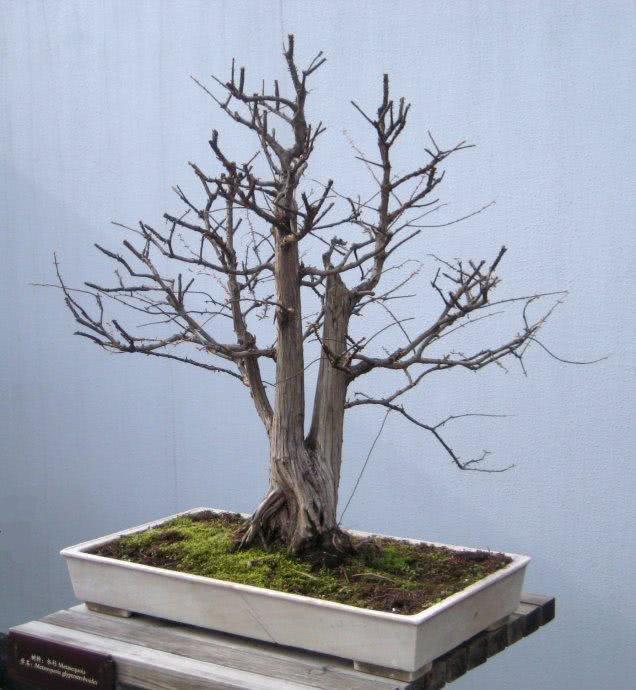
When the word "bonsai" is mentioned, many people will picture before their eyes numerous pots of verdant, delicate creations, as if accompanied by curling wisps of lingering smoke and distant strains of the qin, with a sense of quaint elegance beyond words. Bonsai has a long history in our country, and after more than a hundred years of development, it gradually formed five major schools, namely the Shanghai school, the Lingnan school, the Sichuan school, the Suzhou school and the Yangzhou school. Today we will talk about what historical changes the Yangzhou-style bonsai has undergone and what characteristics it has.
Yangzhou-style bonsai is named after the city of Yangzhou, and naturally it is also centered on Yangzhou and spread to the surrounding cities. The development history of Yangzhou-style bonsai basically coincides with the entire development history of Chinese bonsai. Starting from the Tang Dynasty, Yangzhou-style bonsai became popular among the people, and at that time they were mostly objects of appreciation in the homes of wealthy families. During the Song Dynasty, the great literary giant Su Dongpo wrote a brief description in a preface to one of his poems. This is the earliest surviving description of Yangzhou-style landscape bonsai, which shows that Yangzhou-style bonsai was still relatively famous in the Song Dynasty, otherwise it would not have caught Su Dongpo's attention.
In the Yuan Dynasty, Zhang Zhihan once depicted plum-trunk bonsai in one of his poems, and this kind of bonsai is one of the ancestor-level figures of Yangzhou-style bonsai. Overall, Yangzhou-style bonsai in the Tang, Song and Yuan dynasties had not yet achieved full development. By the Ming Dynasty, and especially the Qing Dynasty, things were very different, and Yangzhou-style bonsai began its path of vigorous development. During the Ming Dynasty, Yangzhou-style bonsai began to develop its own characteristics and gradually formed a style of its own.
In the Qing Dynasty, the literati and poets of Yangzhou all put brush and ink to paper for Yangzhou-style bonsai, writing poems and making paintings to show their love for this kind of bonsai. With this form of advertising, Yangzhou-style bonsai began to become famous throughout the world. At the same time, they also moved out of the homes of high officials and nobles and entered ordinary households, which also promoted the development of Yangzhou-style bonsai. From the late Qing Dynasty until before Liberation, because of the suffering caused by war, the development of Yangzhou-style bonsai stagnated. Only after the founding of New China did the dignified and elegant beauty of Yangzhou-style bonsai return to the world and once again bloom with the beauty that should have belonged to it.
Influenced by the politics, economy, culture, geography and climate of Yangzhou, Yangzhou-style bonsai formed the characteristic of combining both north and south, that is, it has both the vast and magnificent quality of the north and the gentle and graceful beauty of the south. Among these, the most representative characteristics are "cloud slices" and "one bend and three turns". "Cloud slices" means that the branchlets on every branch of the bonsai must be tied thin and flat with palm fiber thread, and the level of skill of the craftsman is revealed in this flatness and thinness. "One bend and three turns" means that on every inch of branch and fork, palm fiber must be used to tie three curved shapes, and only in this way can the degree of "no inch of branch is straight" be achieved. With these two characteristics, Yangzhou-style bonsai has its own distinctive beauty and charm.