Why Do Osmanthus Need Grafting? A Detailed Guide to Grafting Techniques
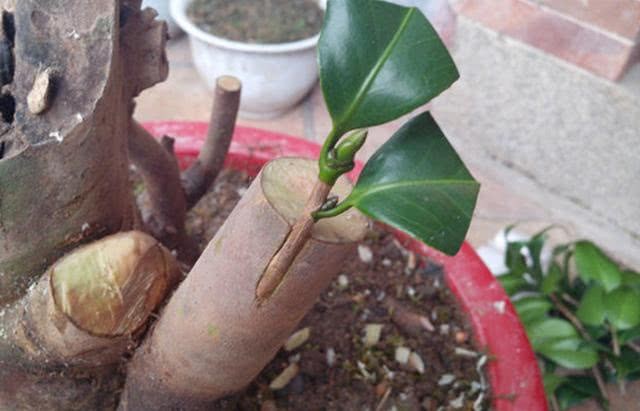
In China, osmanthus has long been renowned as one of the top ten famous flowers, and if you plant an osmanthus in your own courtyard, you can smell its fragrance from far away. So some flower enthusiasts ask, why graft osmanthus? Next, I will tell you the reasons and how to graft.
1. Reasons for Grafting
If you use the ordinary sowing method, successfully growing a mature osmanthus plant takes 8 to 10 years, and the care and management time is relatively long. Nowadays, grafting techniques have become fairly mature, and osmanthus produced by grafting also has a longer-lasting fragrance, so in daily practice we all choose to use grafting techniques.
2. Selection of Grafting Rootstock
Before cultivating an osmanthus, the first thing you must choose is the rootstock needed for grafting. In the north, where the weather is relatively cold, the rootstock chosen is mostly small-leaf privet (Ligustrum quihoui). Chinese privet (Ligustrum sinense), water privet (Ligustrum obtusifolium), and others are also used.
3. Grafting Methods
First, after choosing the rootstock, you can use a U-shaped knife to cut out a U-shaped groove. The length can be chosen as 2.5 cm to 3 cm, and the depth can be half the diameter of the scion. Once this is done, you can begin the next step.
Next, use a scion with 2 buds plus 2 half-leaves. Before use, first cut the lower end of the scion into a 45-degree angle, preferably with a rounded arc shape. Then peel off half the diameter of the bark on the scion.
The next step is to insert the scion into the groove of the rootstock. At this point you can see that the two sides of the scion align exactly with the cambium on both sides of the rootstock, and when we cut the groove, it is best to make the groove as equal in size as possible to the scion, which can greatly increase the survival rate of the scion.
When choosing the rootstock, if you choose a relatively large rootstock, you can then insert several more scions into it. This not only allows the osmanthus to survive, but also allows it to be used as a bonsai. It is recommended to graft just two scions, not too many and not too few, and when grafting, you need to graft according to the shape of the tree stump.
When selecting the branch to graft as the scion, it is best to choose one with thick, sturdy branches and relatively plump buds, as this can increase the survival rate during grafting. If you want to observe whether the grafting has succeeded, you can tell by watching whether the scion on the rootstock falls off.
There is another technique: after grafting is complete, it is best to wrap black tape around the rootstock, as this will also greatly increase the survival rate of the scion after grafting.