Why is the zinnia also called "step-by-step climbing higher"?
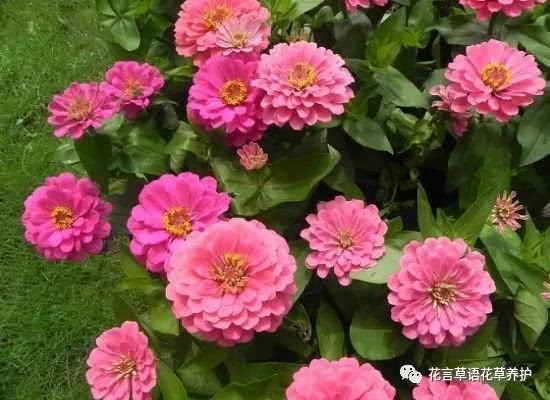
Zinnia, also known as common zinnia, is an annual herbaceous plant. Native to Mexico, it is a famous ornamental plant, with single-petaled, double-petaled, curled-leaf, crinkled-leaf and various differently colored horticultural varieties. It is widely cultivated throughout China.
Morphological characteristics
Stems upright, 30-100 cm tall, covered with rough hairs or long stiff hairs. Leaves broadly ovate or oblong-elliptic, 5-10 cm long, 2.5-5 cm wide, base slightly heart-shaped and clasping the stem, rough on both surfaces, densely covered with short rough hairs beneath, with three basal veins.
Growth habits
Zinnia prefers warmth, is not cold-tolerant, loves sunlight, fears intense summer heat, is robust, drought-tolerant, tolerant of poor soil, and dislikes continuous cropping. Its deep roots and stiff stems make it resistant to lodging. It is best grown in fertile, deep soil. The suitable temperature during the growing period is 15-30°C.
Water and fertilizer care
Apart from the seedling stage, when timely watering is needed, it generally should not be watered too much. However, during the summer period it needs frequent watering to keep the soil moist. Otherwise, the leaves will turn yellow and the flowers will be small with poor color, greatly reducing its ornamental value. During the entire growth and development period, topdressing with light fertilizer 3 times is usually sufficient. At the seedling stage, a mixed fertilizer of chlorine and potassium is mainly used; at the bud stage, phosphorus fertilizer is mainly used; in early September, a compound fertilizer of chlorine, phosphorus and potassium is applied once. If too much fertilizer is applied, the plants tend to grow excessively and become leggy, which causes lodging.
In the high-temperature season, zinnia grows weaker, blooms poorly, and does not set seed. At this time, it should be watered frequently, and red spider mites should be controlled promptly; after the Start of Autumn, it can continue to grow and bloom again.
After each bloom fades, the spent flowers should be pruned promptly to reduce nutrient consumption and facilitate blooming again. At the same time, apply 1 to 2 topdressings of fertilizer mainly based on phosphorus and potassium. Do not plant continuously in the same plot, to reduce the occurrence of diseases.