Old roses won't bloom and look half-dead? Do this and they'll still burst with blooms
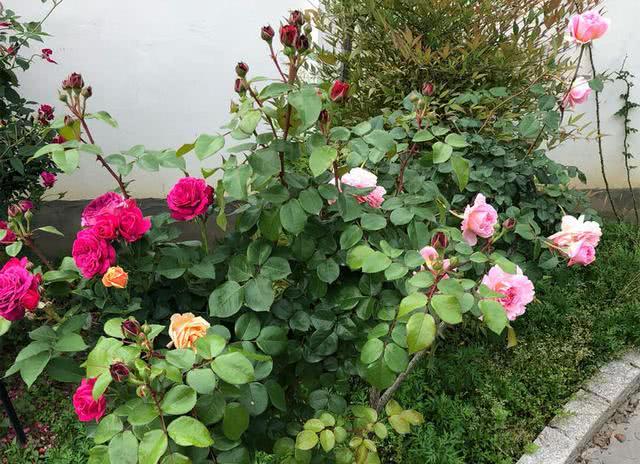
Once a rose gets older, its roots and branches begin to age. Then problems like yellowing leaves, leaf drop, and few flowers easily appear. Normally this kind of rose can only be used as firewood, but as long as you follow these steps, an old rose can still burst with blooms.
Cause analysis:
Because the root system of an old rose has become woody, it cannot absorb more nutrients. It is just like a person growing old, all kinds of functions decline. Such a rose perhaps can only slowly wait for death.
The solution: there are no roses that cannot be cured, only beginners who do not understand.
The aging phenomenon of roses often shows as thin, weak branches with few flowers, branches drying up after pruning, thin and pale leaves and petals, yellowing and falling leaves, and weak resistance to pests and diseases. For this, you should look for the causes in water and fertilizer, pruning, and care, and treat the symptoms accordingly.
Stimulate the root system to grow again
An old rose shows yellowing and falling leaves, withered branches, and partial root rot. The solution is to choose new nutrient soil to improve the rose's growing environment. Stimulate the root crown to produce adventitious roots, thereby achieving the goal of relief.
Condition the plant and stimulate vitality
Fertilizing Yellowing leaves, few flowers, small flowers and thin, weak branches are signs of fertilizer deficiency. Apply fertilizer according to the elements it lacks, and at the same time apply other element fertilizers to increase the utilization rate of that element. At this time we can supplement the rose with organic nutrient solution, which is very beneficial to root growth.
For severe deficiency of a certain element, damaged roots, or when trace elements need to be applied, foliar feeding is suitable, with the concentration preferably kept at 0.3%-0.5%. Choose evening for fertilizing and spray from the underside of the leaves. To improve the utilization rate of the fertilizer, you can also apply plant vitality essence to help the plant return to normal as soon as possible. For weak plants, it is better to apply small amounts multiple times, with thin fertilizer applied frequently, to prevent fertilizer burn.
Prune the branches for a fresh burst of growth
Pruning Pruning is divided into growing-season pruning and winter pruning. Growing-season pruning: first, promptly cut off the flower stalks and dead branches after flowering, and cut away the rootstock suckers sprouting from the base of grafted plants. The general principle of pruning is to cut off diseased, pest-infested, thin and weak branches, thin out parallel branches, overly dense branches, and inward-growing branches, remove straight branches and keep slanted ones, prune weak trees and weak branches heavily, and prune strong trees and strong branches lightly.
After doing this to an old rose, it can also produce many buds and burst with blooms.