What are the key points of peony cultivation techniques? A must-read for growing enthusiasts
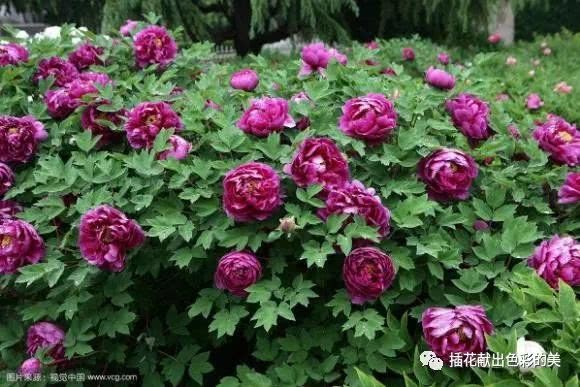
Peony flowers are large and fragrant, hence they are also known as "national beauty and heavenly fragrance."
Today let's get right into the topic! Let's learn together what peony cultivation involves.
Planting: The soil should be loose in texture, fertile, and neutral to slightly alkaline. Remove broken and diseased roots from the peony seedlings to be planted, dip them in insecticide and fungicide, and place them into a pre-prepared pot or pit. The root system should be spread out. Fill soil to more than half of the pot or pit, gently lift and shake the seedling, then firm the soil. The depth should be such that the root crown is slightly below the pot surface or ground level.
Watering: After planting, water thoroughly once. Peonies dislike waterlogging, so water as appropriate during the growing season. In arid northern regions, generally water before flowering, after flowering, and before the ground freezes. For pot cultivation, to facilitate management, after flowering you can cut off the spent flowers and bury the whole pot in the ground.
Fertilizing: One year after planting, fertilizing can be done in autumn, mainly with decomposed organic fertilizer. It can be applied together with loosening the soil, by broadcasting, or by hole application. In spring and summer, chemical fertilizers are mostly used, applied together with watering as pre-flowering and post-flowering fertilizer. For pot cultivation, liquid fertilizer can be applied together with watering.
Pruning: In the year of planting, cut back to the ground level. After sprouting in spring, keep about 5 branches and remove the rest to concentrate nutrients, so that the flowers will be large and brightly colored in the second year. In autumn and winter, along with clearing the garden, cut off dried flower stalks, thin weak branches, and non-flowering branches. For pot cultivation, shape them as desired.
Cultivation: During the growing season, cultivate in time, pull out weeds, and watch for the occurrence of diseases and pests. In autumn and winter, carry out deep plowing of the soil mounds for peonies more than two years old.
Repotting: When potted peonies have grown for three or four years, they need to be repotted in autumn into a larger pot with new fertile soil, or divided and replanted separately.
Spraying: Before sprouting in early spring, spray lime sulfur mixture; in summer, use a mixed solution of insecticide and fungicide, once every 2 weeks depending on the condition. Combined with fertilizing, it is advisable to also add chemical fertilizers and growth regulators.
Forcing bloom: To increase flowers for festivals or celebratory events, depending on the variety, peonies can be warmed about 50 days in advance, with the temperature controlled at room temperature 10--25°C, averaging around 15°C. In the early stage, keep the plant moist; after budding, ensure ventilation and light; after the buds form, control the temperature according to the flowering schedule. Normally, apply foliar fertilizer and ensure an adequate water supply. In this way, flowers can be seen at any time in both winter and spring.
Ornamental display: A single peony plant's natural flowering period is about 10--15 days, shortening as the temperature rises; at 3--8°C it can last over a month. For field planting, temporary sheds can be set up to shield from wind and light to extend the viewing time; for pot cultivation, it should be moved to a place without direct sunlight, at a temperature of 5--10°C, in a ventilated and well-lit environment, and watered as appropriate according to its appearance and the moisture level of the potting soil. Do not splash water on the flowers; this way the flowering period is longest. When cutting for flower arrangements, the wound should be cut in water or singed. The water for the arrangement should have preservative added or a little white sugar to extend the blooming time of the cut flowers.