Appreciation of collected wild Shimpaku juniper bonsai: the private collection of American master Ryan Neil
Ryan Neil - bonsai enthusiasts in China may not be too familiar with this name, but in Europe and America he is absolutely a star of the bonsai world. When he was in his early twenties, still in college studying horticulture - he is one of the few formally trained bonsai artists - he happened to meet a disciple of Masahiko Kimura, who recommended Kimura's nursery to him, so he went to Japan to see it, and afterward wrote to Masahiko Kimura every few days, expressing his wish to study under him. Masahiko Kimura kept refusing, and this went on for more than a year, nearly two years, until Kimura finally could not take it anymore and agreed. So Neil went to Japan and stayed there for several years. After returning to the United States, he opened his own nursery, called Mirai.
In the mountains over there in the United States there are lots and lots of pines and junipers. Because the United States is vast and sparsely populated, and there are even fewer people digging up trees, you can pick and choose top-grade collected material in the mountains at will. This is clear from my article a few days ago. So American bonsai artists have it great - whatever they take down is bound to be a masterpiece. In China these days, by contrast, basically every tree digger who goes up the mountain digs up whatever they see.
For people who have no pressure in life, the best things are surely kept for themselves. That is why the things they collect are never ordinary, run-of-the-mill goods. On the other hand, a few days ago a friend left me a comment saying that in the bonsai business there is a price but no market. Come to think of it, that is true - a bonsai priced at several million is not so easy to actually cash in, and in the end these trees probably all die in the hands of the bonsai artists themselves. Maybe I just do not understand the world of rich people. An outsider like me can just pick up a couple of cheap landscaping seedlings by the roadside and play with those - no money wasted, no rice wasted, at most buying a collected stump for a few dozen yuan, and nothing in the triple digits, so I do not even post my own things; they are really too embarrassing to show, and posting them would waste my friends' data and time. If you want to see high-end bonsai, just go to a bonsai nursery or a market and snap a few photos, and feast your eyes. If you look online it is even more of a bargain - just a few cents' worth of electricity. ^_^
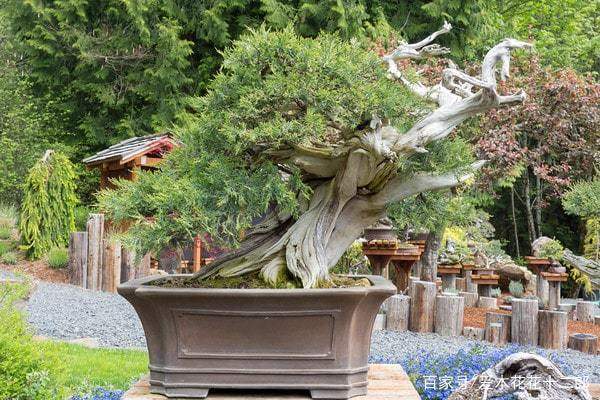
Japanese bonsai artists are of course extremely skilled at creating pine and juniper bonsai. Let us take a look at the collected Shimpaku junipers in this guy's own nursery - they really are wonderfully bizarre and a delight to the eye.