Which four kinds of flowers and green plants are suitable for growing indoors? Gardening tips shared
With the improvement of living standards, using green plants to decorate homes has become a fashion. And evergreen foliage plants as well as green flowering plants, many of them have the effect of eliminating toxic chemicals inside buildings. Which flowers and plants are most suitable for placing indoors? Let's find out.
1. Begonia (Malus spectabilis)
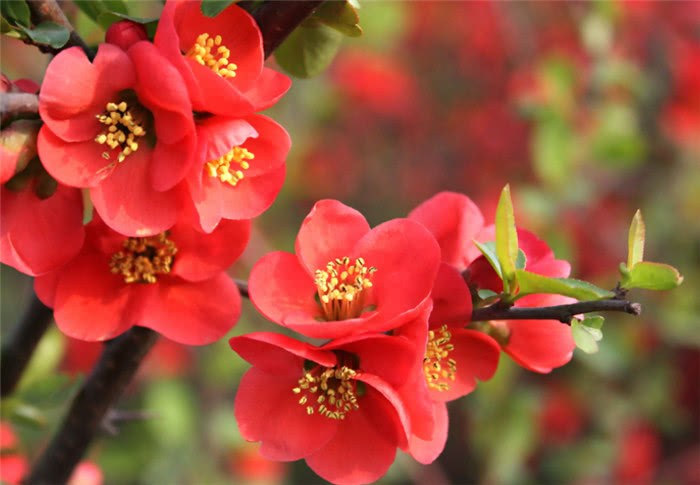
Begonia, a tree species. It has long been known as the "national beauty." Begonia likes sunlight, is not tolerant of shade, and dislikes waterlogged conditions. Begonia is extremely cold-hardy and has strong adaptability to severe cold and arid climates. Begonia has strong resistance to carbon dioxide and can be made into bonsai for pot cultivation. The best planting time is before budding in early spring or after leaf fall in early winter. Begonia blooms brilliantly with an elegant flower form; it can be made into bonsai, used for cut branches in vases, and for other decorative purposes, beautifying your home.
2. Monstera (Monstera deliciosa)
Monstera belongs to the Araceae family and is a perennial woody climbing evergreen shrub, also known as Penglai banana, monstera banana, and so on. The stem of monstera is green and thick, with a ring-like extension; the surface is shiny and the back is greenish-white. It is extremely shade-tolerant, prefers humid environments, and dislikes strong light exposure and dryness. Monstera grows best in fertile, loose, slightly acidic loam with high water absorption and good water retention, with leaf mold or peat soil being best. Monstera is a well-known large indoor potted foliage plant, with the ability to absorb harmful gases such as formaldehyde and benzene, achieving the effect of purifying indoor air, making it an ideal indoor plant.
3. Spider plant (Chlorophytum comosum)
Spider plant, also known as weeping pot grass, guilan, and so on, is a perennial evergreen herbaceous plant of the Liliaceae family. Flower stems are drawn out from the leaf cluster, growing into stolons that produce leaf clusters at the tips. Spider plant leaves are clustered, resembling flowers, evergreen all year round, and it is a famous foliage flower. Spider plant prefers a large pot with a small plant, and likes sandy loam with good drainage and aeration. Spider plant likes warm and humid climate conditions, and is neither cold-tolerant nor heat-tolerant. Generally, keeping one pot of spider plant in a room can almost completely absorb the toxic gases released by smoking and building materials in the air, playing a role in purifying the air. Spider plant is suitable for hanging in front of a window or on top of a bookshelf.
4. Freesia
Freesia belongs to the genus Freesia in the Iridaceae family, a perennial bulbous flower. The leaves are linear, it blooms early, the flowers are borne on one side, and it has a fragrant scent. Freesia has relatively strict water requirements; it fears both moisture and drought. If the soil contains too much water, it easily causes root rot. If the soil lacks water, growth will be hindered and the leaf color will lose its luster. It is best to plant freesia in clay pots; during the growing period, watering should not be excessive, generally watering once a week is enough, and watering should be sufficient when the flower stems are being drawn. Freesia is suitable for pot cultivation or as cut flowers; its plant form is delicate and elegant, its flower colors are rich and vivid, and its flowering period is relatively long. The flowering period is at New Year's Day and Spring Festival, opening right during the flower-scarce season, and it is deeply welcomed by people. It can be used as a potted flower to adorn halls and desks.
Besides these four kinds of flowers for indoor cultivation, how many others do you know? Welcome to share your views in the comment section below. If you like this article, why not subscribe, and there will be more wonderful articles to share with you.