A cactus blooms with 100 flowers, why won't yours bloom?
Daily care tips for cacti
Cacti have few requirements for their growing environment, but if you want a cactus to bloom, you need to put in plenty of effort with light, water and fertilizer, and soil.
1. Light and temperature
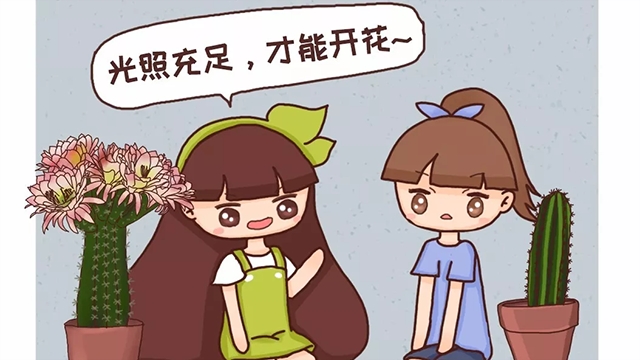
Cacti have very high light requirements. If you want a cactus to bloom, it must have a sufficient environment with sufficient light, placed on a south-facing balcony or outdoors with direct sunlight.
The optimal growing temperature for cacti is between 20 and 35°C. In spring, pay attention to ensuring air circulation, and place it by a balcony window with good ventilation.
2. Water and fertilizer
In spring, the cactus enters its vigorous growth period and has a high water demand, so water it about once a month. When watering, do not spray; be sure to water from the roots, otherwise the ball is prone to rot.
Fertilize once every 20 days, choosing to do so in the early morning or evening of a sunny day. If the potting soil is relatively dry, sprinkle a little water on the potting soil before fertilizing, then give one thorough watering the next morning for even better results.
3. Soil
For potted cacti, you can use a growing medium mixed evenly from 3 parts leaf mold, 3 parts garden soil, and 3 parts coarse sand, plus 1 part plant ash.
Potting and repotting are best done in early spring. When potting, line the bottom of the pot with a layer of broken tiles or gravel about 3 cm thick to aid drainage.
Repotting and root pruning for cacti
1. Choosing a pot
For planting cacti, it is best to choose flower pots with good water and air permeability, such as red clay pots and tile pots.
Choose a small pot with little soil as much as possible, so the potting soil dries easily and the roots are easily kept in a warm environment, which is good for root growth.
2. Mixing soil
You can use ordinary soil, peat soil or leaf mold, and coarse sand mixed in a ratio of 5:3:2, and additionally add a small amount of slaked lime to increase drainage and air permeability.
Mixing akadama soil, coconut coir soil, coal cinders, and river sand in a ratio of 2:2:3:3 also works.
3. Root pruning
1. Gather the tools
Prepare carbendazim, scissors, tweezers, a small brush, a knife, and so on.
2. Removing from the pot and cleaning
Turn the pot upside down and support it, shaking gently until the potting soil loosens, then take out the cactus and gently brush away most of the soil.
3. Pruning and drying
Use scissors to cut off most of the fibrous roots, pruning from the roots upward, then let it dry for about 3-5 days.
4. Sterilizing and potting
Use a cotton swab to brush a layer of carbendazim powder onto the pruned areas, then bury it back into the soil.
5. Later management
After potting, do not place it in direct sunlight; choose a cool, ventilated spot.
After 7 days, soak the pot with water at a level of 1-2 cm for 15 seconds, and after another 7 days you can manage it normally.
Have you learned today's little cactus knowledge?
If you think the article is pretty good
you can share it with friends~