Secrets to repotting succulents: trimming and drying the roots keeps plants healthy and plump
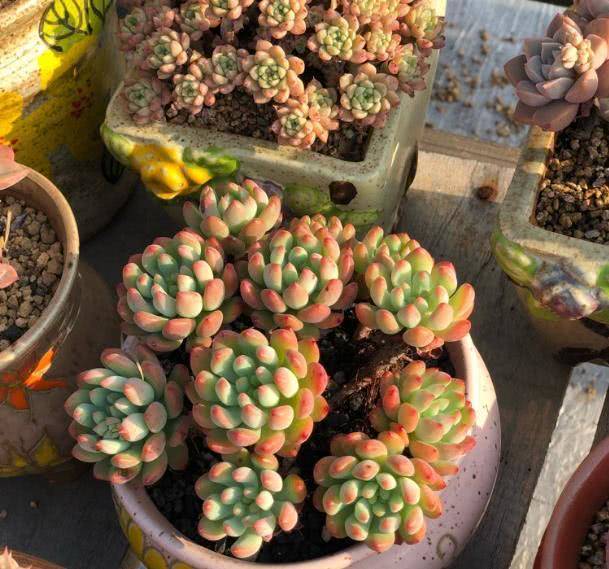
Under long-term artificial cultivation, the root system of a succulent fills the entire pot, which is bad for drainage and aeration, and the soil nutrients are completely depleted, turning from the original granular structure into powder, with the soil becoming acidic, so after growing to a certain stage you must repot the succulent. Repotting a succulent carries fairly high risk, and some plant lovers simply prefer succulents in small pots, so even when the succulent is big enough to be repotted, they still choose not to. So is repotting really a must? From a scientific point of view, yes, it is necessary: when a succulent grows to a certain stage, you should give it a larger pot and carry out repotting and soil renewal.
If it has already been planted for more than half a year, or one or two years, it is recommended to change the soil, trim the roots appropriately, let them dry for a few days (in a bright, ventilated place without direct light) until the wounds heal, then replant and let the plant recover. If you are repotting because the succulent is growing poorly, then root trimming is a must; with some old specimens, the roots at the base have completely died off. Take the succulent Aeonium 'Zwartkop' (black rose) as an example: after summer dormancy, the roots at the base sometimes die off completely, and shaving off part of the epidermis at the base where roots grow can stimulate new root growth.
The next thing to do is choose a new pot one size larger. When choosing a pot, pay attention to its water permeability and size specifications; it must not be too large, and a size that fits the succulent's current size is enough. At the same time, prepare an appropriate amount of new soil suitable for growth; the new soil must be loose and breathable, drain well and have a certain nutrient-holding capacity. Succulents are very afraid of waterlogging, so the water permeability of the new soil and pot must be good.
You can take the succulent out of its old pot, being careful not to damage the roots when removing it. After taking the plant out, wash it with clean water. When washing, all the old soil on the roots must be rinsed off, and then, to make the roots look neat, you can also trim the roots appropriately with scissors.
As for soil, every plant lover has their own habits when mixing it; most people's method is to first lay large granules at the bottom, then mix small granules with soil, plant the succulent in, and finally add a top dressing layer - firstly for looks, secondly to keep things tidy when watering, and thirdly to press the succulent's roots firmly in place. And just like that, a beautiful pot of succulent is ready; next comes waiting for it to settle in.
A newly potted succulent can simply be placed in a ventilated spot to slowly adapt to all-day light; give the little plant a buffer period first, and after about four or five days it can be moved outdoors. Repotting is actually not as hard as you think. After planting, there is no need to water immediately; in slightly moist soil, a succulent actually roots faster and better. Afterwards, when the potting soil dries out, spray a little water, and after a week you can water thoroughly once. During this period, the succulent may show shrivelled leaves and look poor - do not worry, this is normal.
This is a gathering place for succulent lovers, sharing succulent care tips; you are welcome to follow and join the discussion.