Hosta flowers have these other names too, did you know?
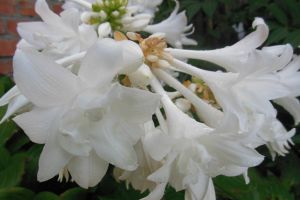
Other names for hosta
It gets its name because its flower buds are delicate and glossy like jade and shaped like a hairpin. Different regions have different names for it, such as: Yuchunbang, Baihehua, Baieneixiaohua, Baihexian, Baie, Baiyuzan, Xiaobajiao, Jinxiaocao, Huagulian.
Habits of hosta
Native to China and Japan. The flowers are white or purple, funnel-shaped, with the front section divided into 6lobes, and the flowering period is7~9months.
Cold-hardy, it prefers partial shade and dislikes direct sunlight, and is suitable for planting in fertile, moist, well-drained sandy loam soil.
A typical shade plant; its leaves turn yellow when exposed to strong light.
In most parts of China it can overwinter outdoors, and its above-ground parts wither after frost.
The flower language of hosta
Tranquility, tolerance and gentleness.
Like the lotus, the hosta grows in soil yet remains unsoiled, elegant and pure.
The value of hosta
Landscape value: nowadays courtyards mostly plant it in grassland under trees, on rocks, or on the shady side of buildings
Medicinal value: the whole plant can be used as medicine. The flowers have the effects of draining dampness, regulating menstruation and stopping vaginal discharge; the roots have the effects of clearing heat, reducing swelling, detoxifying and relieving pain; the leaves can detoxify and reduce swelling.