What are the other names for Maxillaria? Let's find out together
Growing habits of Maxillaria
Maxillaria prefers a hot and humid climate, and requires plenty of sunlight. In spring, autumn and winter the sunlight is milder, so it can take full sun; in summer, move it to a spot with partial sun or keep it away from the intense direct midday sun, and you can also use a shade net to block part of the light.
Sphagnum moss is the best growing medium as it holds water well. Water when the moss is half dry. When short of water, the pseudobulbs will shrivel and develop wrinkles, but they will recover as soon as you water again. Every spring and summer, new shoots sprout from the base of the pseudobulbs and grow extremely fast. It is recommended to repot into a larger pot as needed; besides holding moisture better, the pot will not tip over from being top-heavy.
Because it grows fast, it needs more fertilizer. Besides regularly applying some slow-release fertilizers such as Magic Fertilizer and Hi-Control as a base fertilizer, when growth speeds up in spring and summer you can apply some quick-acting fertilizer, such as Hyponex No. 2 20-20-20 at 3,000 times dilution, watered on once a week. Propagation is mainly by division, best done in spring and summer; take 3-5 pseudobulbs as one unit and plant each into a pot.
Ornamental value of Maxillaria
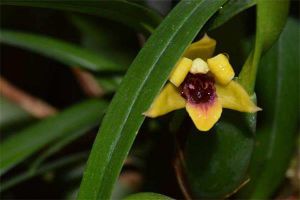
Perhaps the flowers of Maxillaria are not especially outstanding, but its fragrance is very alluring; just plant one and the whole room fills with its scent. Friends who want to buy one should take advantage of the flowering season to choose one at the flower market, otherwise once the flowering season passes it is not so easy to find, because although a non-flowering Maxillaria can still be enjoyed as a foliage plant, without the fragrance to complement it, it is less likely to make people want to buy it, so flower sellers will not put it on display.