What are the characteristics and symbolic meanings of pitcher plants?
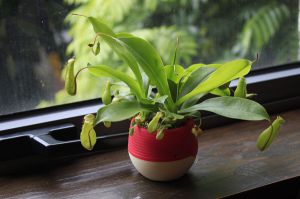
Other names for pitcher plants
Water pitcher plant, monkey cup, monkey pitcher, piglet cage, thunder god pot
Habits of pitcher plants
They generally grow at the edges of forests or shrublands or in open areas, where environmental humidity and temperature are relatively high and there is bright, indirect light.
Pitcher plants grow in acidic, nutrient-poor soil, generally choosing white sand, peat, sandstone or volcanic soil.
Special cases: for example, Nepenthes rajah grows in soil with high metal element content. Nepenthes albomarginata can grow near the high-tide line on sandy beaches. Some pitcher plants can even grow on rock walls. Species like Nepenthes aristolochioides can grow without contacting soil, as epiphytes on trees.
Pitcher plants are divided into lowland pitcher plants and highland pitcher plants according to altitude. Caring for highland pitcher plants requires a relatively large temperature difference.
The flower language of pitcher plants
Carefree, with no desires or demands.