What kind of growing environment is suitable for Japanese false spiraea
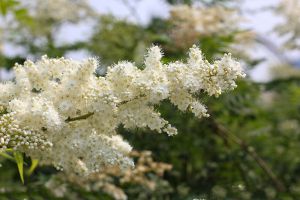
Other names for Japanese false spiraea
Shan gao liang tiao zi, gao kai zi, ba ben tiao
Morphological characteristics of Japanese false spiraea
Japanese false spiraea is a shrub up to two meters tall, with spreading branches; it has cylindrical branchlets, green when young and turning dark reddish-brown or dark yellowish-brown when old; the winter buds are ovoid, with a relatively rounded and blunt apex, hairless or slightly pubescent at the tip, purple-brown, with several alternate, exposed scales.
Japanese false spiraea has pinnate compound leaves, with about 11-17 leaflets, 13-23 cm long including the petiole and 10-13 cm wide, the leaf rachis slightly pubescent; the leaflets are opposite, 2-2.5 cm apart, lanceolate to ovate-lanceolate, 5-7 cm long and 1.8-2.5 cm wide, with a relatively sharp apex, their margins irregularly serrate or entire, 13 mm long and about 5-8 mm wide, slightly pubescent on the outside.
Growth habits of Japanese false spiraea
Japanese false spiraea is relatively cold-tolerant and prefers partial shade. It grows relatively well in well-drained sandy soil. It grows relatively fast and is a good summer flowering plant.
The flower language of Japanese false spiraea
Friendship, effort:
Japanese false spiraea is named for its flowers, which look like pearls. It is pretty yet not lacking in elegance, braving frost and snow. In autumn, when all flowers have withered and the wind and sand are severe, it alone stands out in beauty, becoming a beautiful symbol of strength and bravery, able to struggle against difficulties, and known as an inspiring companion.
In China there is a tradition of loving, planting and appreciating plum blossoms, regarding plum blossoms as a symbol of uprightness and unyielding integrity. Japanese false spiraea blooms every year in July and August, with a captivating fragrance, becoming a beautiful sight in people's lives.