What are the characteristics of the magnolia? A complete guide
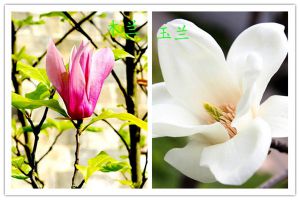
Alternative names for the magnolia
The magnolia is a deciduous tree of the Magnoliaceae family. It is a woody plant and has alternative names such as "white magnolia," "spring-welcoming flower" and "Yutang spring."
Morphological characteristics of the magnolia
The whole magnolia tree can reach up to 25 m in height, with a broad crown formed by spreading branches. The bark is dark gray, rough with natural fissures, and the branches are relatively thick and basically grayish-brown.
The magnolia grows papery leaves that are obovate or obovate-elliptical. The front part of the leaf is broadly rounded and dark green, while the rear part gradually tapers to a narrow point and is light green, and the leaves bear soft hairs.
The magnolia flower buds are ovate. The flowers open before the leaves emerge, with a diameter of about 10-16 cm. The colors are rich, with white and pink being the most common, and the flowers have a fragrant scent.
Growing habits of the magnolia
The magnolia needs ample light to grow. It has good cold resistance and can overwinter safely in the open ground.
A dry environment is suitable for growth. When cultivated in a low-humidity environment, long-term waterlogging easily causes root rot.
Fertile, slightly acidic sandy soil with excellent drainage is most conducive to the plant's development, but it can also be cultivated in weakly alkaline soil.
When magnolias are planted in the south, because temperatures are higher, they can bloom from December to January of the following year.
The magnolia can also resist the threat of certain harmful gases and has a special ability to "absorb sulfur." Therefore, the magnolia is also regarded as an excellent pollution-resistant landscaping tree species and is widely planted in areas with atmospheric pollution.
The value and uses of the magnolia
Ornamental value: As a famous type of flowering tree in China, the magnolia in full bloom has a shape like a holy lotus, with petals spreading in all directions. Planted in groups in courtyards and parks, it can form dazzling masses of white flowers and has extremely high ornamental value.
Medicinal value: Magnolia flowers contain a variety of vitamins and alkaloids, as well as a unique volatile oil. When used as medicine, they have effects such as opening the lungs and clearing the nose, and dispelling wind and dispersing cold. They can also treat symptoms such as headache, menstrual pain and rhinitis to a certain extent, and have a good inhibitory effect on skin fungi.
Culinary value: Because magnolia flowers are rich in a variety of vitamins, trace elements and amino acids, they can also be brewed into tea, and there are also some dishes made by using magnolia flowers as an ingredient.
The flower language of the magnolia
The pure white flowers of the magnolia blooming amid the lush green, accompanied by their rich fragrance, spontaneously evoke a beautiful longing and sentiment, and they usually symbolize "gratitude for kindness received."