Did you know fragrant wood has these other names too?
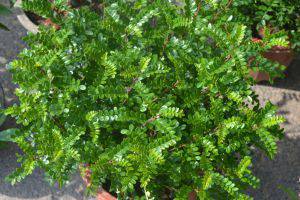
Other names for fragrant wood
The other names for fragrant wood are: Xiangye tree, purple teak, Qingxiang tree, and others.
Morphological characteristics of fragrant wood
Fragrant wood is a small shrub or tree plant. Large ones can be enjoyed in courtyards, small ones can be grown in pots. It ranges in height from 1-8 m, so it can absolutely be grown and enjoyed at home.
The bark of fragrant wood is gray, and the branches have brown lenticels. The leaves of fragrant wood are even-pinnate compound leaves arranged alternately, with 4-9 pairs, and the leaf rachis has narrow wings. The flowers of fragrant wood are relatively small, mainly purplish red. The female flowers are sparsely arranged, usually with 7-10 tepals, while the male flowers have 5-8 tepals. Both male and female flowers are arranged in two rows.
The drupe of fragrant wood is about 5mm long and about 6mm wide, and the ripe drupe is red.
Origin and living habits of fragrant wood
Fragrant wood originates from the Yunnan region of our country and grows in areas between 500-2800 m in altitude. It can be found on mountain slopes, in valleys, open forests, thickets, and limestone river valleys. It has strong adaptability, but the seedlings are not cold-tolerant, so if growing it in northern regions, pay attention to cold protection.
Fragrant wood has a strong resistance to drought and is distributed in China's Tibet, Sichuan, Guizhou, and other places, as well as in the plateau regions of Myanmar.
Flower language of fragrant wood
Elegance, dedication.