What are the alternative names of the desert rose? A detailed introduction to its common aliases
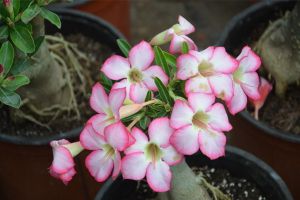
Alternative names of the desert rose
Tianbao flower
Growth habits of the desert rose
It prefers a climate that is hot, dry and sunny, and likes calcium-rich, loose, airy, well-drained sandy loam. It does not tolerate shade, is averse to waterlogging, dislikes strong fertilizer and raw manure, and fears cold. The optimum growing temperature is 25-30°C.
In summer it can be placed outdoors in a sunny spot for care without shading, because the desert rose tolerates drought and needs thorough watering to keep the soil moist. In winter watering must be restricted, and the overwintering temperature should be kept above 10°C so that it drops its leaves and goes dormant. During cultivation, apply organic fertilizer 2 to 3 times a year as appropriate.
For propagation, in summer select 1- to 2-year-old branches about 10 cm long and cut them off; once the cut surface has dried slightly, insert them into a sand bed, and they will root in 3 to 4 weeks. Air layering can also be used for propagation in summer. If seeds can be collected, sowing propagation is also possible.
In the south the flowering period is from May to August on the Gregorian calendar; it loves light and warmth, so during the warm, humid growing season sunlight is essential to promote photosynthesis. If kept in shade for a long time, the branches and leaves tend to become soft and droop, and it is very difficult for it to set flower buds again. With sufficient sunlight, flower bud differentiation can proceed normally.
The flower language of the desert rose
Love you unchangingly