African Jasmine Aliases: A Complete List, So It Turns Out It Has These Names Too
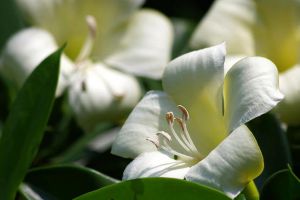
Other Names for African Jasmine
Liyudan, Huicimu, Qinghuangguo, Xiaohuangguo
Growing Habits of African Jasmine
African jasmine originally grows at an altitude of500-1800m in dense mountain forests or broad-leaved forests in limestone areas. It likes warmth and sunshine, but direct sunlight should be avoided. It prefers a high-humidity, well-ventilated environment and is not cold-tolerant; when the temperature drops sharply, the plant can easily die. It is suitable for growing in loose, fertile soil with good drainage.
The most suitable temperature for African jasmine growth is18°C to32°C. In summer, when the temperature exceeds38°C, growth slows down. In some areas of South China, it can overwinter outdoors when planted in the ground, while north of the Yangtze River, potted plants require a winter greenhouse temperature of no less than3°C to5°C, and at least above0°C; otherwise, the leaves and young shoots are very easily frost-damaged.
When a strong cold air mass from the north moves south and a large temperature drop occurs, the temperature should be appropriately raised to ensure it does not fall below10°C; otherwise, frost-damaged plants will find it very difficult to resume growth in a short time the following year. For the small number of potted plants placed in offices or rooms, besides adding a double-layer plastic film bag, an air conditioner or heater can be turned on at night; this must not be taken lightly.
The Flower Language of African Jasmine
Its flower language is plain and natural, pure and clean.