What are the growth advantages of Serissa japonica? A detailed guide
Other names for Serissa japonica
Mantianxing, Baimagu, Suiye Dongqing.
Growth habits of Serissa japonica
Serissa japonica likes sunlight and is also fairly tolerant of shade, but fears fierce wind and blazing sun; during hot summer weather it should be given light shade.
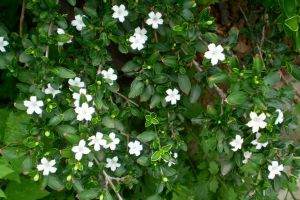
It blooms small white flowers in June; the tree is very small with sparse branches and leaves, full of elegant charm, and can be made into a potted specimen. It likes light shade and fears the sun, and is often found under leafy trees in deep mountains. It is divided and planted in spring, or propagated by cuttings during the yellow plum rain season, and is best watered with weak tea. It is not strict about temperature, being evergreen in South China and semi-evergreen in Southwest China.
For pot culture, use a moist growing medium that is rich in humus, loose and fertile, highly permeable, and slightly acidic; it will grow well.
Distribution of Serissa japonica
Serissa japonica is mainly distributed in China's Jiangsu, Zhejiang, Jiangxi, Guangdong and other southeastern and central provinces. It is also found in Japan and Taiwan, China. It mostly grows wild among mountain forests and on stream banks and rocky slopes. It is a subtropical tree species, fond of warm, humid climatic conditions and of semi-shaded, loose, fertile, well-drained soil, especially neutral and slightly acidic soil. Its cold resistance is not strong, and overwintering in a greenhouse in winter requires temperatures above 0°C. Its sprouting and suckering ability is fairly strong, so it tolerates pruning and is also easy to shape. In southern gardens it is often planted in the open ground under tree canopies and among shrubs; in the north it is mostly grown in pots for ornament and overwintered indoors. It is also a good bonsai material.
Medicinal value of Serissa japonica
It dispels wind and releases the exterior, clears heat and drains dampness, and relaxes the sinews and invigorates the collaterals. It is used for colds, cough, toothache, acute tonsillitis, pharyngitis, acute and chronic hepatitis, enteritis, dysentery, malnutrition in children, high blood pressure headache, migraine, rheumatic joint pain, and leukorrhea; the stem is burned to ash and applied to the eyes to treat eye opacity.
The flower language of Serissa japonica
Serissa japonica: the love of willingly playing a supporting role, endless love, care, bringing good luck, a pure heart.