Protea: you may not know it has these alternative names
Alternative names for protea
Lotus flower, sea god flower
Morphological characteristics of protea
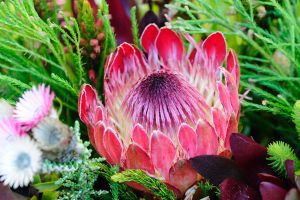
A perennial, multi-stemmed evergreen shrub. Its flower is actually a flower ball, with many stamens, surrounded by large, richly colored bracts.
The flower ball is 12~30 cm in diameter. The diameter of the flower ball varies between 12 cm and 30 cm. In a single growing season, a large and sturdy protea plant can produce 6-10 flower balls, and individual plants can produce 40 flower balls in a single growing season. The color of the flower ball bracts varies from milky white to deep red. It has thick stems and glossy leaves, and when mature the plant is about 1 m tall.
Growing habits of protea
Protea prefers a warm, slightly dry and sunny environment, is not cold-tolerant, and does best with free-draining conditions; it dislikes waterlogging and requires loose, well-drained acidic soil. In winter the temperature is generally not lower than 7 degrees, and some varieties can tolerate around zero degrees. The soil for seedlings needs good drainage. During the growing period, summer requires a cool and dry climate, with appropriate shading during strong sun; the suitable growing temperature is 27 degrees, and winter requires a warm, sunny environment with slightly higher air humidity.
Main value of protea
Ornamental: Protea is an evergreen shrub with lush branches and leaves, large flowers, upright bracts and petals, exceptionally beautiful colors, and a long ornamental period. It is suitable for potted display and is also an excellent material for cut flowers and dried flowers.
Medicinal: relieves cough, benefits the mind, clears nasal congestion, promotes urination, softens the skin, lowers blood pressure, benefits the nerves, calms, and promotes sweating.