Is Prunus triloba easy to grow? A detailed analysis of its growing difficulty
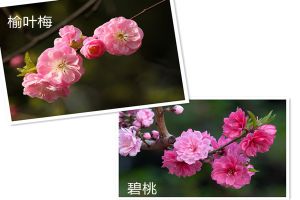
The genus and family of Prunus triloba
Prunus triloba is a shrub, rarely a small tree, belonging to the genus Prunus in the rose family (Rosaceae).
Other names for Prunus triloba
Prunus triloba is also called xiaotaohong, yumei, and yuyeluanzhi.
The origin of Prunus triloba
It is produced in Heilongjiang, Jilin, Liaoning, Inner Mongolia, Hebei, Shanxi, Shaanxi, Gansu, Shandong, Jiangxi, Jiangsu, Zhejiang and other provinces and regions. It is planted in most parks throughout China. It also occurs in Central Asia of the Soviet Union.
The morphological characteristics of Prunus triloba
Prunus triloba is a shrub, rarely a small tree, 2-3 m tall, with spreading branches and a large number of short small branchlets. The branchlets are gray, and the one-year-old branches are grayish brown, hairless or slightly pubescent when young. The winter buds are relatively short and small, 2-3 mm long.
The branches of Prunus triloba are purplish brown, and the leaves are broadly elliptic to obovate, with a 3-lobed apex and serrated margins.
The flowers of Prunus triloba range from single to double, purplish red, 1-2 borne in the leaf axils, with a flowering period in April.
The fruit of Prunus triloba is red, nearly spherical, and hairy.
Main varieties of Prunus triloba
Single-flowered Prunus triloba: bears pink or pinkish white flowers, single-petaled; the flowers are small, with both the calyx and petals in 5 parts, similar to the wild Prunus triloba, and the branchlets are reddish brown.
Double-flowered Prunus triloba: bears reddish brown flowers, the flowers are large, double, numerous and dense, with more than 10 calyx segments, and both the calyx and pedicel have a red flush. In double-flowered Prunus triloba, the bark of the branches is mostly split. Because its flowers are large, it is also called "large-flowered Prunus triloba". It is a variety with relatively high ornamental value, but it blooms later than other varieties.
Semi-double Prunus triloba: pink flowers, semi-double, with both the calyx and petals in more than 10 parts. The plant's branchlets are reddish brown, and it is relatively widely cultivated in gardens and courtyards.
Curved-branch Prunus triloba: the flowers are small and densely borne on the branches, the flower color is rose-purple red, semi-double or double, with 10 calyx segments, of which 5 are triangular and 5 are lanceolate. The plant's branchlets are purplish red and smooth, and it blooms earlier than other varieties, with a flowering period of about 10 days.
Truncate-leaved Prunus triloba: flowers pink. The characteristic of truncate-leaved Prunus triloba is that the front end of the leaf is broadly truncate, nearly triangular. It has strong cold resistance and is commonly cultivated in Northeast China.
Purple-leaved large-flowered double Prunus triloba: a new variety bred by our farm, with bright purplish red leaf color, double flowers, and mostly pink flowers. It is the newest variety of large-flowered double Prunus triloba.
The flower language of Prunus triloba
Fate, the meeting of souls