What other names does Polyscias have? These names you may not know
The family and genus of Polyscias
Polyscias belongs to the Araliaceae family as an evergreen shrub.
Other names for Polyscias
Polyscias is also called round-leaf Ming aralia and round-leaf Polyscias.
The origin of Polyscias
Polyscias is native to the Pacific islands.
The morphological characteristics of Polyscias
The plant height is 1-3 m, the side branches are slender, and the branch lenticels are prominent.
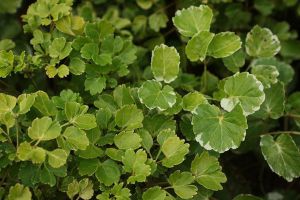
Leaves alternate, odd-pinnate compound leaves, leaflets in 3-4 pairs, opposite, elliptical or oblong, with serrated margins, the leaf green often has white spots, umbellate inflorescence, flowers small. Pale white-green, mainly used for potted plants, garden trees and hedges.
The growth habits of Polyscias
Polyscias by nature likes a high-temperature environment and is not very cold-tolerant; it requires bright light, but is also fairly shade-tolerant, and dislikes direct sun exposure; it likes moisture and is also fairly drought-tolerant, but dislikes waterlogging.
Contact with its sap may cause a red rash; when it touches the mouth, it can sometimes cause swelling and pain that makes swallowing impossible.
The varieties of Polyscias
Polyscias has three types according to the leaves, namely round-leaf Polyscias, fine-leaf Polyscias and feather-leaf Polyscias.
Round-leaf Polyscias is relatively common, also called round-leaf Ming aralia and round-leaf Polyscias. Its leaves are relatively small, about 5-8 cm in diameter, and the leaf margins are edged with irregular milky white spots, making it deeply loved by flower enthusiasts. The stems of round-leaf Polyscias are upright, and the leaves are bright and variable, making it a fairly popular foliage plant. Plants of different sizes can be used to decorate the living room, bedroom, study, balcony and other places, both stylish and elegant, and natural and fresh. There are also variegated and silver-edged varieties.